Four hundred years ago, the world of the microscope was unexplored. That means the structure of things like plants and the tissues of animals were a mystery, and there were thousands of other plants and animals that we didn't even know existed! The causes of the diseases could only be hypothesized about and medical science was limited. Antonie van Leeuwenhook's invention of the microscope in the 17th century brought about a revolution in scientific knowledge.
The word microscope comes from the word micro, meaning very small, and scope, meaning an instrument for looking at objects. Anything which is too small to be seen with the naked eye is microscopic.
While it had been known for more than 2,000 years that glass bends light, the fist accurate lenses were not made until around the year 1300. It wasn't until 1600, though, that it was discovered that optical instruments could be made by combining lenses.
Antonie van Leeuwenhook was a Dutch scientist and one of the pioneers of microscopy in the late 17th century. He made his own simple microscopes which had a single lens and were handheld. He made several drawings of what he observed and discovered bacteria, although he didn't know what they were at the time. In the middle of the 17th century, Robert Hooke drew pictures of cork seen through the microscope. Just like van Leeuwenhook, Hooke wasn't sure of exactly what he had seen.
Because of the low glass quality and imperfect shape of the lenses, many early microscopists saw very distorted images. Throughout the 19th century, huge improvements were made to lenses and the microscope as we know it today was gradually developed into a better instrument.
Swift Optical believes in creating an information-hub for educators, students, and professionals to interact with and learn from each other.
Showing posts with label Science Teachers. Show all posts
Tuesday, July 28, 2015
Tuesday, October 21, 2014
Making the Invisible, Visible with iPads
This is a guest post from Maggie Keeler (@KeelerMS).
Microscope work in science class is often a solitary endeavor. Traditionally, one student searches to find a seemingly invisible organism while patiently waiting for the teacher to come confirm that they’ve found it. Not anymore! With the MotiConnect App from Motic, this isolated experience becomes collaborative. MotiConnect allows you to connect up to six iPads wirelessly to a Moticam X camera or digital microscope with Moticam software. Each student is then able to capture images, record videos, annotate, and measure images from the microscope.
The video below captures Osmosis in a Red Onion through a MotiConnect microscope.
#4. Moticam cameras generate their own Wi-Fi signal, so you don’t have to worry about whether your school network is running slowly or might go down during class.
#3. The Moticam X camera works on microscopes and dissecting scopes. It also has a macro setting which makes it possible to document experiments that wouldn’t be safe to observe up close. For example, the process of making alum from aluminum cans in a fume hood in chemistry class.
#2. MotiConnect makes microscope work accessible to more students. Traditional microscopes can be very difficult for students with visual or motor disabilities to use. By using MotiConnect and the iOS accessibility features, more students are able to experience the microscopic world first hand.
#1. Because the MotiConnect app saves images and video to the camera roll, the possibilities for sharing and app smashes are endless.
Maggie will be leading an iPads in the Middle & High School Pre-Conference workshop at the November 12-14 iPad Summit in Boston. She will also be presenting "How to Bring Your Lab Notebook into the 21st Century: The Ultimate STEAM App Smash."
Microscope work in science class is often a solitary endeavor. Traditionally, one student searches to find a seemingly invisible organism while patiently waiting for the teacher to come confirm that they’ve found it. Not anymore! With the MotiConnect App from Motic, this isolated experience becomes collaborative. MotiConnect allows you to connect up to six iPads wirelessly to a Moticam X camera or digital microscope with Moticam software. Each student is then able to capture images, record videos, annotate, and measure images from the microscope.
The video below captures Osmosis in a Red Onion through a MotiConnect microscope.
Top Five Reasons Why I like MotiConnect?
#5. Unlike some other iPad Microscope cameras, MotiConnect does not require a hardwire connection to iPad. This allows multiple students to access the camera simultaneously and to independently choose when/what images or video he or she wants to capture.#4. Moticam cameras generate their own Wi-Fi signal, so you don’t have to worry about whether your school network is running slowly or might go down during class.
#3. The Moticam X camera works on microscopes and dissecting scopes. It also has a macro setting which makes it possible to document experiments that wouldn’t be safe to observe up close. For example, the process of making alum from aluminum cans in a fume hood in chemistry class.
#2. MotiConnect makes microscope work accessible to more students. Traditional microscopes can be very difficult for students with visual or motor disabilities to use. By using MotiConnect and the iOS accessibility features, more students are able to experience the microscopic world first hand.
#1. Because the MotiConnect app saves images and video to the camera roll, the possibilities for sharing and app smashes are endless.
Maggie will be leading an iPads in the Middle & High School Pre-Conference workshop at the November 12-14 iPad Summit in Boston. She will also be presenting "How to Bring Your Lab Notebook into the 21st Century: The Ultimate STEAM App Smash."
Wednesday, February 6, 2013
Girls are Science Rock Stars (but not in the U.S.)
For years now researchers have been searching for ways to explain why there are so many more men than women in science fields. A recent test given in 65 developed countries by the Organization for Economic Cooperation may hold a piece of the puzzle. The exam finds that among a representative sample of 15-year-olds around the world, girls typically outperform boys in science. The exception: the United States.
The U.S. has jumped on board a STEM education revolution, but what explains the gap? Hannah Fairfield and Alan McLean of the New York Times attributes Andreas Schleicher, who oversees the O.E.C.D., with saying that different countries offer different incentives for learning science and math. He stated that in the U.S. boys are more likely than girls to "see science as something that affects their life." He also references the "stereotype threat."
While women are capable of being very successful in science careers, many choose not to pursue them because of gender roles in occupations and gender norms affect their decision. Researchers suggest that cultural forces like these are eminent in the U.S., Britain and Canada but far less noticeable in Russia, Asia and the Middle East, where a much larger proportion of girls are involved in science and engineering. In Jordan, for example, girls score more than eight percent better than boys do in science!
Read the New York Times report and check out the graphics.
The U.S. has jumped on board a STEM education revolution, but what explains the gap? Hannah Fairfield and Alan McLean of the New York Times attributes Andreas Schleicher, who oversees the O.E.C.D., with saying that different countries offer different incentives for learning science and math. He stated that in the U.S. boys are more likely than girls to "see science as something that affects their life." He also references the "stereotype threat."
While women are capable of being very successful in science careers, many choose not to pursue them because of gender roles in occupations and gender norms affect their decision. Researchers suggest that cultural forces like these are eminent in the U.S., Britain and Canada but far less noticeable in Russia, Asia and the Middle East, where a much larger proportion of girls are involved in science and engineering. In Jordan, for example, girls score more than eight percent better than boys do in science!
Read the New York Times report and check out the graphics.
Friday, February 1, 2013
How to Make a Naked Egg
Since weekends these days have been all about experiments, here's one you and your children will mutually enjoy! Have you ever made a naked egg? Yes, that's right, an egg without a shell. Most people have never seen an egg without its shell. In fact, most people didn't even know it was possible, but luckily for you, with science, the possibilities are endless. Check out Imagination Station's anatomy of a chicken egg for some background before you begin the experiment.
The shell of chicken egg is typically primarily made up of calcium carbonate. If you soak this egg shell in vinegar (which is normally around 4% acetic acid), you start a chemical reaction that dissolves the calcium carbonate shell. The acetic acid reacts with the calcium carbonate in the egg shell and releases carbon dioxide gas that you see as bubbles on the shell. So how does the egg stay together? The egg insides remains intact because its held together by the two fragile membranes just inside the shell.
So let's get started! Here's what you'll need:
Thankfully, the process is easy. So that you don't break the egg from the get go, carefully place the egg into the glass and then fill the glass with vinegar so that the egg is completely covered. If the egg starts floating a bit, that's okay! As long as there's enough vinegar in the glass to mostly cover the top of the egg, you're golden.
Next is the worst part of the experiment: waiting. You must wait for the acetic acid in the vinegar to react with the calcium in the egg shell. Shortly after you cover the egg, you should see some bubble appearing on the outside of the egg. What you're looking at is carbon dioxide gas produced from the reaction. It can take anywhere from 12-24 hours for a good portion of the shell to be removed. Good progress is being made when you notice a white frothy scummy layer on the surface of the vinegar.
Once you've let the egg soak for a day, you can finally take it out! You have to be careful when you're taking the egg out of the glass. While fishing it out with a spoon might sound like a good idea, it can result in the egg breaking or being damaged. Instead, pour the liquid into another cup and gently catch the egg with your hand as it comes out. One you have the egg, you should be able to literally rub the shell off of the egg with you fingers. The shell will come off as a white powdery substance. Be careful during this process so that you don't break the egg.
If your egg isn't quite fully naked yet, fill up another glass with vinegar and soak the egg overnight again. After two days of soaking, you should have a completely naked - and very, very cool looking - egg. Notice that after the second day of soaking your eff is a bit bigger than it was after the first day. This is because some of the vinegar (and some of the water in the vinegar) has moved through the egg's semi-permeable membranes to the inside of the egg. Ladies and gentlemen, this is called osmosis!
For a list of fun things to do with your naked egg, instructions on how to shrink your egg, information on eating the egg or how it smells and some science fair project ideas, click here.
The shell of chicken egg is typically primarily made up of calcium carbonate. If you soak this egg shell in vinegar (which is normally around 4% acetic acid), you start a chemical reaction that dissolves the calcium carbonate shell. The acetic acid reacts with the calcium carbonate in the egg shell and releases carbon dioxide gas that you see as bubbles on the shell. So how does the egg stay together? The egg insides remains intact because its held together by the two fragile membranes just inside the shell.
So let's get started! Here's what you'll need:
- Vinegar (at least 16 ounces)
- A couple of glasses
- Raw eggs
Thankfully, the process is easy. So that you don't break the egg from the get go, carefully place the egg into the glass and then fill the glass with vinegar so that the egg is completely covered. If the egg starts floating a bit, that's okay! As long as there's enough vinegar in the glass to mostly cover the top of the egg, you're golden.
Next is the worst part of the experiment: waiting. You must wait for the acetic acid in the vinegar to react with the calcium in the egg shell. Shortly after you cover the egg, you should see some bubble appearing on the outside of the egg. What you're looking at is carbon dioxide gas produced from the reaction. It can take anywhere from 12-24 hours for a good portion of the shell to be removed. Good progress is being made when you notice a white frothy scummy layer on the surface of the vinegar.
Once you've let the egg soak for a day, you can finally take it out! You have to be careful when you're taking the egg out of the glass. While fishing it out with a spoon might sound like a good idea, it can result in the egg breaking or being damaged. Instead, pour the liquid into another cup and gently catch the egg with your hand as it comes out. One you have the egg, you should be able to literally rub the shell off of the egg with you fingers. The shell will come off as a white powdery substance. Be careful during this process so that you don't break the egg.
If your egg isn't quite fully naked yet, fill up another glass with vinegar and soak the egg overnight again. After two days of soaking, you should have a completely naked - and very, very cool looking - egg. Notice that after the second day of soaking your eff is a bit bigger than it was after the first day. This is because some of the vinegar (and some of the water in the vinegar) has moved through the egg's semi-permeable membranes to the inside of the egg. Ladies and gentlemen, this is called osmosis!
For a list of fun things to do with your naked egg, instructions on how to shrink your egg, information on eating the egg or how it smells and some science fair project ideas, click here.
Tuesday, January 29, 2013
Students: Apply for the Polar Research Experience!
Good news if you're currently a 10th or 11th grader: the National Science Foundation (NSF) is currently accepting applications from 10th and 11th grade students with a strong interest in the natural sciences and a passion for learning to participate in the 2013 Joint Science Education Project (JSEP). JSEP is a unique summer research project in - are you ready for this? - Greenland! The program has two parts: The Kangerlussauq Science Field School, sponsored by the Government of Greenland; and the US-led Science Education Week, sponsored by the NSF.
So, what happens if you're selected? This summer, all of the selected US high school students will join their peers from Denmark and Greenland to spend three weeks conducting field science in Kangerlussuaq, Greenland and visiting a research station on the Greenland ice sheet. Students will work with Arctic scientists along with their peers on research projects in a variety of fields including biology, geology, climatology, chemistry and engineering.
This program is sponsored by the NSF's Office of Polar Programs and is in collaboration with the Joint Committee. Each year, JSEP is led and supported by one of the Albert Einstein Distinguished Fellows. Leading the 2013 JSEP experience is Lynn Foshee Reed (NSF, '12-'13).
Students have until February 15, 2013 to submit their applications. The application and more information can be found at www.arcus.org/jsep. Spread the word and apply today!
So, what happens if you're selected? This summer, all of the selected US high school students will join their peers from Denmark and Greenland to spend three weeks conducting field science in Kangerlussuaq, Greenland and visiting a research station on the Greenland ice sheet. Students will work with Arctic scientists along with their peers on research projects in a variety of fields including biology, geology, climatology, chemistry and engineering.
This program is sponsored by the NSF's Office of Polar Programs and is in collaboration with the Joint Committee. Each year, JSEP is led and supported by one of the Albert Einstein Distinguished Fellows. Leading the 2013 JSEP experience is Lynn Foshee Reed (NSF, '12-'13).
Students have until February 15, 2013 to submit their applications. The application and more information can be found at www.arcus.org/jsep. Spread the word and apply today!
![]() |
| JSEP 2012 |
Friday, January 18, 2013
Weekend Experiment: Make a Sparkly Explosion!
It's Friday again. That means your trying to figure out exactly what you're doing this weekend. Well, good news: I have a science experiment that will be fun for you and your children! What child doesn't request experiments that explode, sparkle or use fire? The more she-bang, the better. Let your children lead you through this sparkly explosion and you'll love the creation as much as they do.
Here's what you'll need:
- A vase
- Baking soda
- Vinegar
- Food coloring (in your child's favorite color, of course!)
- Blue glitter (Glitter is integral to this activity, but you can use any color you'd like.)
- Other supplies like salt, spaghetti noodles, pepper and anything else you and your child dream up
- A pan to contain the mess
Now that you have everything you need, here's what you'll need to do.
- Start by placing 2-3 tablespoons of baking soda into the bottom of the vase and then place the vase in the pan.
- Add 6-7 drops of food coloring and 1-2 teaspoons of glitter to the vase.
- Quickly pour in about 1/2 cup of vinegar and then...watch for the sparkles!
- When the reaction is over, repeat the experiment, but this time let your child choose what supplies they want to add. For example, what does pepper look like in the "explosion?" Does salt change how the reaction works? What if you add spaghetti noodles? Remember that you and your child are experimenting, so let them change the variables, predict what they think will happen and then view the results.
At some point in the experiment, review with your child that baking soda and vinegar react when mixed together to make an explosion. If you're child is old enough, go further and explain that baking soda is a base while vinegar is an acid, and that mixing any base with an acid results in some sort of reaction. Carla did this experiment with her children, check out how it went and what she has to say.
Thursday, January 17, 2013
Preview: NSTA & NGSS are Coming to SA!
That's right, NSTA's National Conference all about Next Generation Science Standards (NGSS) and the learning, literacy and living behind them will be in the Alamo city this April! NSTA aims to bring together science education leaders and professional development experts with thousands of educators to immerse themselves in the finest industry resources, providing content, concepts, strategies, techniques and information on the critical issues in science education today. Not to mention all the cool things you'll get to see while you're there!This conference's featured presentation is - you guessed it - a Next Generation Science Standards Town Hall Meeting. Since the final version of NGSS will be released sometime in March, speaker Stephen L. Pruitt will talk about what's next. He'll address how the next standards will affect science education, including classroom instruction, professional development, curriculum materials and state assessments. We went to Pruitt's presentation in Phoenix and he didn't disappoint. Not only did he deliver valuable information on the progress of the NGSS drafts, he was hilarious and brought what could have been a very dry presentation to life. You don't want to miss him when he's in San Antonio in April!
The headquarter hotels for the conference are the Grand Hyatt San Antonio and the Marriott Rivercenter. Conference registration along with exhibits and the NSTA Science Store will be at the Henry B. Gonzalez Convention Center. Most sessions and event have been scheduled at the Convention Center as well as the Grand Hyatt, Marriott Rivercenter, Marriott Riverwalk and the Hilton Palacio del Rio.
The conference begins on Thursday, April 11 bright and early at 8 a.m. and runs through Sunday, April 14 at noon. Find more information on NSTA's website.
Tuesday, January 8, 2013
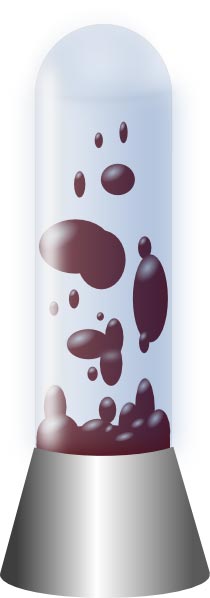
Make a Lava Lamp This Weekend!
Looking for a fun and easy experiment to do with your kids this weekend? Well look no further. Do you remember being mesmerized by the mystery of a lava lamp when you were a kid? The brightly colored "lava" would float back and forth from the top and bottom of the lamp, combine with other "lava" blobs and then break away from them - it was seriously magical!With just water, a clear plastic bottle, vegetable oil, food coloring and some Alka-Selzter (or other tablets that fizz) you can create your own lava lamp on your kitchen counter.
Once you have everything you need to get started, here's what you'll need to do:
- Pour some water into the plastic bottle until it's about a quarter full.
- Pour some vegetable oil into the bottle until it's just about all the way full.
- Wait until the water and oil have clearly separated.
- Add around a dozen drops of your favorite color food coloring to the bottle.
- Observe the food coloring make its way through the oil and into the water, mixing.
- Cut an Alka-Selzter tablet into five or six smaller pieces and drop one of them into the bottle - things should start getting a little crazy, just like a real lava lamp.
- When the bubbling stops, add another piece of the Alka-Selzter tablet and enjoy!
If you're wondering what the science is behind this experiment, check this out: you know that oil and water don't mix very well (or at all), so the two separate from each other with the oil on top because it has a lower density than water. The food coloring is able to fall through the oil and mix with the water - key to this experiment! When you drop the Alka-Seltzer in, it releases small bubbles of carbon dioxide gas that rise to the top of the bottle, taking some of the colored water with it. The gas escapes when it reaches the top of the bottle and the colored water falls back to the bottom. To read more about the science involved, visit the Science Kids website.
Thursday, December 27, 2012
Science Classes of the Future
We've all heard it at least once in our lives: "When I was a kid..." Sure, there was once a time that you sat in a science classroom and watched your teacher scrawl on the board, drew a few pictures yourself on a worksheet and called it a day as the bell rang. Once you got home, you opened your textbook and studied more images of what was taught that day in class and that was that.
Now, there's much to be said about these teaching methods, but walk into a science classroom next year and as students learn how chemicals combine to form new substances they're manipulating foam or paper mache models to show how bonds are made, or moving electrons around on a computer screen or tablet, testing what happens when a transfer occurs.
As John Martin on CNN illustrates, science classrooms across America will begin to change next year when 26 states expected to adopt the Next Generation Science Standards (NGSS) implement the new standards in their classrooms. How students effected by NGSS learn will even be different than their older siblings did.
The goal of NGSS is to have students gain an understanding of science, technology, engineering and math that makes them competitive on a global scale. So what does this mean? It means that students of the next generation will be making models, solving problems and getting messy - hands-on activities that lead to self-discovery and better understanding of subject matter.
Not surprisingly, the most noticeable differences will be seen in classrooms. Listening to lectures and then drawing a model or two will become a thing of the past. Instead, students will create models that represent a cell or an atom - often on a computer - and then use that representation to collect data and make predictions.
Now, if you're worried about the dollar signs that come along with NGSS, don't be. NGSS isn't about fancy, cutting-edge equipment; instead, it's about getting students engaged, involved and excited about STEM fields. Hopefully this will increase their likelihood to pursue STEM careers upon graduation from high school.
Read Martin's entire report on the future of science classrooms and NGSS.
(And make sure you check out the video embedded in the article. Pay close attention to the first few seconds of the video and you'll see Swift scopes!)
Monday, December 17, 2012
Active Explorer Moves STEM Learning to the Field
Active Explorer, a new mobile platform that aims to spark student's interests in the science, is taking STEM education to a whole new level. Now, smartphone in hand, students can leave the classroom and make science discoveries in the field. The American Association for the Advancement of Science (AAAS) partnered with Qualcomm's Wireless Reach initiative and mobile virtual network operator Kajeet to create the program.
This new program is what every science teacher has been hoping for. If you want your students engaged in what they're learning, there's no better way to do it than through self discovery. With Active Explorer, educators are able to log in to their computer a create a "quest" that asks their student to collect certain data with the program on their smartphones. Students can take pictures, record audio and video, create a map, make sketches or even write notes based on their observations. After they're finished collecting all their data, a mere push of a button will upload their data to their teacher and their own web account, enabling them to create slideshows, posters and e-books to share with classmates.
Active Explorer was piloted with eight teachers and 120 students across grades 4 and 7 in four Washington D.C. schools this October. District Administration reports that the program's easy-to-use design doesn't require teacher training and that it's intended for after-school use, when students are most likely to make real-world connections beyond the classroom. That's not to say that Active Explorer can't be used in the classroom, though! Active Explorer can also be integrated into classroom activities.
The program, was created to increase student interest in STEM and to keep the U.S. competitive in global education. Active Explorer also resembles what those in STEM careers are doing more and more frequently these days: using mobile platforms to collect their data.
Active Explorer runs on Android phones, which must be provided by the school district, but is free to download. You can learn more about the program at its website, www.active-explorer.com.
This new program is what every science teacher has been hoping for. If you want your students engaged in what they're learning, there's no better way to do it than through self discovery. With Active Explorer, educators are able to log in to their computer a create a "quest" that asks their student to collect certain data with the program on their smartphones. Students can take pictures, record audio and video, create a map, make sketches or even write notes based on their observations. After they're finished collecting all their data, a mere push of a button will upload their data to their teacher and their own web account, enabling them to create slideshows, posters and e-books to share with classmates.
Active Explorer was piloted with eight teachers and 120 students across grades 4 and 7 in four Washington D.C. schools this October. District Administration reports that the program's easy-to-use design doesn't require teacher training and that it's intended for after-school use, when students are most likely to make real-world connections beyond the classroom. That's not to say that Active Explorer can't be used in the classroom, though! Active Explorer can also be integrated into classroom activities.
The program, was created to increase student interest in STEM and to keep the U.S. competitive in global education. Active Explorer also resembles what those in STEM careers are doing more and more frequently these days: using mobile platforms to collect their data.
Active Explorer runs on Android phones, which must be provided by the school district, but is free to download. You can learn more about the program at its website, www.active-explorer.com.
Wednesday, December 12, 2012
iON Future: Exactly What STEM Needed
Every day, professionals in STEM careers help people get better, discover new things, save the planet, build the future, solve mysteries and play with some very neat tools. Makes you wonder why getting today's youth involved in STEM can be so difficult sometimes. Well say hello to Change the Equation's iON Future: The STEM Exploration Game!
iON Future lets you explore STEM careers, identify the ones that best match your interests and then play your way to your dream STEM future. Can you say genius?! What kid doesn't enjoy a good, engaging computer game these days. I know I can't think of one. Combining iON Future with all the other platforms designed to ignite excitement in students about STEM, the United States is moving in the right direction.
iON Future dispels notions that STEM embodies the traditional science, technology, engineering and math careers that so many students find daunting and boring. In fact, the site includes careers like 3D animator, athletic trainer, automotive designer, librarian and science reporter. Any child can find something they're interested in and then discover how it relates to STEM. It's exactly what STEM education needed to supplement classroom efforts.
Check out the website, create an account with your child or play as a guest - you may even learn something new!
Monday, December 10, 2012
Swift's Motic Cameras Magnify Learning
The Vandalia Drummer News ran a great story this morning on how microscope cameras are impacting the learning atmosphere of Butler High School - one biology experiment at a time.The cameras fit over the eyepiece of the school's existing microscopes and are linked via USB to a computer monitor at each lab station. While the students still mount their slides like normal, they manipulate them using the computer. Since students don't have to pass the microscope back and forth, collaboration is encouraged and ample time is saved - two things every teacher values.
Butler High School biology teacher Kelly Stevens is quoted in the story as saying, "One of the downfalls of working with just one microscope is that only one student can see what's on the slide at a time. Now everyone sees the same thing in real time, and I can get around the classroom faster."
Coupled with Motic software, which allows students to capture video of their slides, make time-lapse photos and do side-by-side comparisons of their specimens, these cameras are generating a buzz at Butler. With the software, teachers can even "push" electronic documents from their computer to each lab station. Students then complete the assignment and "push" it back to their teacher, making for completely paperless labs.
Stevens insists in the article that while the new technology is great, it doesn't do the learning for the students.
He told Vandalia Drummer News that, "students still have to learn how to use the microscopes; the technology doesn't do the work for them. We are doing the same things we have done in the past, this just takes it to a new level."
Can there really be a down side to this story? Unfortunately, yes. Just one classroom at Butler is hooked up with the new technology. This means that Stevens and the high school's other biology teachers must all share the space so all students benefit from the technology.
As Stevens put it, "The cameras have made us so much more efficient in the classroom. It would be nice if we could equip all of our biology classrooms with this technology."
Read the Vandalia Drummer News story.
Tuesday, December 4, 2012
Building a STEM Nation with "MissionSTEM"
While we all know that STEM fields need to be the focus of education reform these days, the statistics never get easier to take in. In 2009, more than 1.5 million U.S.citizens earned bachelor's degrees, but only a mere 4.4 percent were in engineering and just a small 1.1 percent were in the physical sciences. Further, only 2.4 percent of the undergraduate degrees earned were in computer science and mathematics represented just 1.0 percent of degrees.
Not surprisingly, the National Science Foundation 's National Center for Science and Engineering Statistics reported that a very small 0.8 percent of all bachelor's degrees earned in 2009 were by women in engineering and 0.2 percent of those earned were by African Americans.
For a country that wants to maintain status as a world leader in STEM, these numbers aren't just startling, they're unacceptable. Just recently, NASA took these statistics to heart and set out to change them. NASA Administrator Charles Bolden said that NASA wants "the nation's STEM degree programs to be more welcoming, supportive and accessible to all students."
With that in mind, NASA launched MissionSTEM.nasa.gov, a Web site created by NASA'a Office of Diversity and Equal Opportunity, to assist colleges and universities in strengthening their STEM programs. The site connects NASA with its grantees, professional STEM organizations and other interested stakeholders in order to creatively address issues like recruitment and retention of diverse students.
Way to go, NASA! Emerging programs like this one and Change the Equation's iONFuture are steps in the right direction for the nation's STEM future. Combined with NGSS efforts and political legislation, the United States should be starting to move up the competitive STEM ladder.
So, where will we find the future of STEM? As Bolden says, "We will find it in every community, in every university and college and in students of every socio-economic background. The talent is out there. It always has been."
Creating programs like MissionSTEM is just the start. The rest of the battle involves making the commitment to encourage and support American students to pursue their STEM dreams.
Wednesday, November 28, 2012
Christmas Science Activities
Christmas cheer is usually accompanied by chilly weather that keeps us all inside where it's warm and toasty. Nostalgic: yes. Always the best scenario: no. Having your kids cooped up inside during their holiday break only leads to one thing: headaches. Take a look at these Christmas science ideas - they'll have you and your little ones entertained and on a path of discovery!
With just sugar, water, some string or a lollipop stick a jar and some sellotape, you can grow your very own Christmas crystals! Add some sparkles and food coloring for extra cool looking crystals. Or, make the string you're using to grown your crystals into shapes like circles and stars for homemade ornaments!
Take some time to explore a mini Christmas tree. Go out and purchase one of those darling mini conifer trees that you've always wanted to buy and grab some scissors, a ruler and a magnifying glass. Start by looking at the tree and describing it. Ask your children what normally happens to a trees' leaves in the winter. Then ask them what's different about this tree. This is an excellent activity that contains valuable lessons about evergreens and isn't too messy.
But if messy is what you're looking for, try making some candy cane goo with your kiddos. Cornflour, water, peppermint essence and red food coloring is what you'll need for this activity. You and you're mini scientists will marvel at how the goo feels like a solid one minute and then a liquid the next! Notice that when you ball the goo up it's a solid, but when you drop it on the floor it turns to a liquid again.
If you're experimenting after Christmas, celebrate the new year with a firework in a glass. Now, before you dismiss this idea because it sounds dangerous, know that this activity is totally safe, very easy and looks just like a firework without the bang and sparkle. Here's what you'll need: a tall glass along with a smaller glass, warm water, oil and food coloring. The science bit of this activity illustrates water's inability to mix with oil and that oil is less dense than water. You'll have to do the experiment to figure out the rest!
Find even more Christmas science activities here.
But if messy is what you're looking for, try making some candy cane goo with your kiddos. Cornflour, water, peppermint essence and red food coloring is what you'll need for this activity. You and you're mini scientists will marvel at how the goo feels like a solid one minute and then a liquid the next! Notice that when you ball the goo up it's a solid, but when you drop it on the floor it turns to a liquid again.
If you're experimenting after Christmas, celebrate the new year with a firework in a glass. Now, before you dismiss this idea because it sounds dangerous, know that this activity is totally safe, very easy and looks just like a firework without the bang and sparkle. Here's what you'll need: a tall glass along with a smaller glass, warm water, oil and food coloring. The science bit of this activity illustrates water's inability to mix with oil and that oil is less dense than water. You'll have to do the experiment to figure out the rest!
Find even more Christmas science activities here.
Tuesday, November 20, 2012
Girl Scouts Attend "Cool Science"
![]() |
| U.S. Air Force photo by Julie Imada |
The Girl Scouts spent the day at the Academy working on simple hands-on, educational experiments like how to make ice cream with liquid nitrogen, how a film canister reacts with Alka Seltzer and how many chemistry books a tower constructed of paper and masking tape can support.
Cadet 4th Class Katherine Case saw the bigger picture when she said, "It's an important event because ti gives an introduction to young girls about the world of science, which is important because there aren't many females in the field." She added, "when I was younger, I went to something called 'Girls in Engineering and Mathematic Science' that presented workshops on career fields in science and made me fall in love with the field. Now I'm pursuing that love."
These are the type of programs that we need to see more of! Programs that ignite an interest in STEM fields and leave young students with the desire to pursue a career in STEM. While it's important to target girls when they're young so that they don't grow up thinking that STEM fields are for boys, there should still be a push to get boys just as interested and fired up about STEM.
The Air Force Academy has hosted this workshop every spring and fall for 10 years and hopes it continues to be a hit. Read more about the Nov. 10 workshop.
Do you know of great programs in your area that encourage young people to take an interest in STEM fields? Subscribe to our blog and let us know and you could win a Starbucks giftcard!
Tuesday, November 13, 2012
Resources for Women in STEM
By now, just about everyone who's anyone has reported on the low percentage of women in STEM career fields. In 2011, the Economics & Statistics Administration found that less than 25 percent of STEM jobs are held by women, even though they make up more than half of the workforce and college degrees in the nation.
The United State can no longer deny that a glass ceiling is looming over these industries and that men and women are like are doing their best to throw stones at it. I won't discount the progress that has been made over the past few decades, but I will say that more efforts need to be made to ensure a more equitable place for women in these traditionally male-dominated industries. This ideal is something that these 40 essentials share!
Check out 40 Important Online Resources for Women in STEM!
The United State can no longer deny that a glass ceiling is looming over these industries and that men and women are like are doing their best to throw stones at it. I won't discount the progress that has been made over the past few decades, but I will say that more efforts need to be made to ensure a more equitable place for women in these traditionally male-dominated industries. This ideal is something that these 40 essentials share!
Check out 40 Important Online Resources for Women in STEM!
Friday, November 9, 2012
STEM Education Could Be at Risk!
Something that no one in the fight for better STEM education efforts in America wants to hear is that we may be forced to take steps backwards. Unfortunately, that's exactly what may happen. In late October, students at an Arkansas high school got to meet Dr. James Gates, a noted African-American theoretical physicist.
As he spoke about his career and the importance of a STEM education, he told the students that, "There are half of million jobs that can't find Americans to hire because they don't have the skills level. These are the jobs you most want to have in the future."
Despite the fact that STEM education is crucial to the future of this country, the programs in place now are threatened. Last summer, the Congressional debt limit was reached and if Congress doesn't take further action - which seems very unlikely - mandatory reductions in federal discretionary spending levels will take effect in January. Education and STEM-related programs are falling subject to about a nine percent reduction across the board.
If you're worried about the United States, which has been severely declining in STEM over the last few years, you're not alone. Gates sees the reality of the situation and didn't hold back in relaying it to the Arkansas students.
"I worry about what will happen to my country. Investment in education is when we as a country always got richer."
Gates is a professor of physics at the University of Maryland in College Park, but also serves on reelected President Barak Obama's Council of Advisors on Science and Technology. Serving in that role, Gates advises Obama on topics including the increasing need for STEM education in the United States.
Read more about what Gates' visit to Arkansas.
As he spoke about his career and the importance of a STEM education, he told the students that, "There are half of million jobs that can't find Americans to hire because they don't have the skills level. These are the jobs you most want to have in the future."
Despite the fact that STEM education is crucial to the future of this country, the programs in place now are threatened. Last summer, the Congressional debt limit was reached and if Congress doesn't take further action - which seems very unlikely - mandatory reductions in federal discretionary spending levels will take effect in January. Education and STEM-related programs are falling subject to about a nine percent reduction across the board.
If you're worried about the United States, which has been severely declining in STEM over the last few years, you're not alone. Gates sees the reality of the situation and didn't hold back in relaying it to the Arkansas students.
"I worry about what will happen to my country. Investment in education is when we as a country always got richer."
Gates is a professor of physics at the University of Maryland in College Park, but also serves on reelected President Barak Obama's Council of Advisors on Science and Technology. Serving in that role, Gates advises Obama on topics including the increasing need for STEM education in the United States.
Read more about what Gates' visit to Arkansas.
Thursday, November 8, 2012
Swift Spotlight: M3600 Series
Say hello to the flagship model of the Swift educational line. The M3600 series continues Swift's tradition for innovation, quality and student-proof features while updating the well-known M3500 classic model series with a brand new design at the same time. If you're a high school teacher or advanced grade professor, this is the scope you want your students working with.
The M3600 series includes cored and cordless versions, a built-in carrying handle and variable LED illumination. The M3602 models even have a built-in mechanical stage. The "student-proof" design of the scopes mean energy-efficient LED illumination, "one-touch" spring loaded stage clips and proper handling for you. If you haven't already considered adding a Swift microscope to your classroom, start with one from the M3600 series.
Get more information here.
The M3600 series includes cored and cordless versions, a built-in carrying handle and variable LED illumination. The M3602 models even have a built-in mechanical stage. The "student-proof" design of the scopes mean energy-efficient LED illumination, "one-touch" spring loaded stage clips and proper handling for you. If you haven't already considered adding a Swift microscope to your classroom, start with one from the M3600 series.
Get more information here.
Wednesday, November 7, 2012
Energy Research in Front of K-12 Classrooms
Grad students from the University of Nevada, Reno are working with middle school and high school students this fall to present their energy-related science and engineering research to students. What better way to get students interested and involved than bringing the research to the front of their classroom?!
With a $1.2 million grant from the National Science Foundation, students from the College of Engineering will be going above and beyond most traditional graduate school requirements by providing valuable training in teaching, mentoring and communicating science and technology to local schools. The innovative curriculum that engages K-12 teachers and students in STEM is supported by NSF's "Graduate Teaching Fellows in K-12 Education" program.
Like so many other programs being implemented recently, this three-year program is meant to inspire interest in STEM. Through inquiry and project based activities, graduate students and the schools they team up with will encourage middle school and high school students to ask questions that lead them to their own discovery of knowledge and exploration of science. I mean, can it get any better? We need programs like this funded everywhere.
This semester, the energy fellows are working on energy-efficient micro-vehicles, flight dynamics and trajectory planning of descent vehicles and earthquake and structural engineering. Research topics brought to middle school and high school students include energy harvesting using smart materials, nanomaterials for photovoltaics, hydrogen energy and storage, biomass and biofuels, geothermal, wind energy and efficient power grid systems.
Part of the program: a traveling energy science/technology lab, the E-Mobile! The mobile lab will be outfitted with energy-related demonstrations, exhibits and hands-on projects to excite students and the community about engineering. Find out more about the partnership between the University of Nevada, Reno and Washoe County School District here.
With a $1.2 million grant from the National Science Foundation, students from the College of Engineering will be going above and beyond most traditional graduate school requirements by providing valuable training in teaching, mentoring and communicating science and technology to local schools. The innovative curriculum that engages K-12 teachers and students in STEM is supported by NSF's "Graduate Teaching Fellows in K-12 Education" program.
Like so many other programs being implemented recently, this three-year program is meant to inspire interest in STEM. Through inquiry and project based activities, graduate students and the schools they team up with will encourage middle school and high school students to ask questions that lead them to their own discovery of knowledge and exploration of science. I mean, can it get any better? We need programs like this funded everywhere.
This semester, the energy fellows are working on energy-efficient micro-vehicles, flight dynamics and trajectory planning of descent vehicles and earthquake and structural engineering. Research topics brought to middle school and high school students include energy harvesting using smart materials, nanomaterials for photovoltaics, hydrogen energy and storage, biomass and biofuels, geothermal, wind energy and efficient power grid systems.
Part of the program: a traveling energy science/technology lab, the E-Mobile! The mobile lab will be outfitted with energy-related demonstrations, exhibits and hands-on projects to excite students and the community about engineering. Find out more about the partnership between the University of Nevada, Reno and Washoe County School District here.
Tuesday, November 6, 2012
Prof. Shares $2.6M Grant to Gauge Success
A public policy professor was awarded a $2.6 million grant this week to help lead a research team testing the success and effectiveness of Advanced Placement high school science courses.
Director of GW's public policy program Dylan Conger will impose a four year study thanks to funding from the National Science Foundation to figure out how effective courses designed to prepare college-ready scientists are.
This is the first study of inquiry-based science learning and College Board, who administers the AP exams, couldn't be more excited. Just recently, College Board revised both its chemistry and biology offerings to test deeper knowledge of topics. Conger will work alongside researchers from the University of Washington and the nonprofit SRI International throughout the study.
Including over 4,000 students in 40 high schools, the study will track students' progress in the AP class and evaluate if the class affects the students' college and career performance in the long run. Conger, like many other advocates of advancing STEM education, believes that tracking the success of AP science courses is critical to understanding U.S. students' progress in technical learning.
Looks like this could be a good first step in helping the country compete globally in STEM fields. Learn more.
Director of GW's public policy program Dylan Conger will impose a four year study thanks to funding from the National Science Foundation to figure out how effective courses designed to prepare college-ready scientists are.
This is the first study of inquiry-based science learning and College Board, who administers the AP exams, couldn't be more excited. Just recently, College Board revised both its chemistry and biology offerings to test deeper knowledge of topics. Conger will work alongside researchers from the University of Washington and the nonprofit SRI International throughout the study.
Including over 4,000 students in 40 high schools, the study will track students' progress in the AP class and evaluate if the class affects the students' college and career performance in the long run. Conger, like many other advocates of advancing STEM education, believes that tracking the success of AP science courses is critical to understanding U.S. students' progress in technical learning.
Looks like this could be a good first step in helping the country compete globally in STEM fields. Learn more.
Subscribe to:
Posts (Atom)