Showing posts with label Science Education. Show all posts

Friday, June 28, 2013

Summer Science Experiment: Mystery Markers!

Summer heat is officially taking over. Since your youngsters can't spend all day outside, bring them inside and embrace their inquisitive side with another summer time experiment that you can do right inside your kitchen. Even better, you'll enjoy this experiment as much as your kids will.

Here's what you'll need:
  • Bowl of water
  • Plain white paper towels, cut into strips
  • 3 or more different markers, including black (non-primary colors work best)
When you have all your materials together, get started!
  1. Draw a wavy line an inch from the bottom of each towel strip, using different color markers on each one. Make sure you note which color is on which strip.
  2. Dip each strip in to the water so that the bottom edge of the paper towel is submerged, but not the line of marker ink. Hold the strip in place as the water creeps up the paper towel.
  3. The marker ink will spread, revealing the different types of dye that make up each color. The young minds around you will this it's magic!
The lesson here is that most colors are actually made up of several different colors or dyes. Science-ly speaking:  as the paper towel draws the water out of the bowl, the water molecules bond with the different ink molecules and spread them. The process of separating these dyes is known as chromatography. 

To make it really interesting, have your young scientist cover up their eyes while you draw a line on a fresh paper towel strip. Dip it in the water and, once the ink has spread, have them open their eyes and try to guess which marker you used!

Thursday, June 13, 2013

Summer Science: Ivory Soap Explosion

Your kids are home for the summer and when bad weather keeps them from playing outside or heading to the pool, back up plans can be few and far between. Cue science experiments you can do with them in your kitchen! Why not do something that's fun and teaches your young ones a thing or two about science?

The Ivory soap experiment will do just that. In fact, it will probably produce a reaction neither you or your child were expecting. 

Here's all you'll need:
  • One bar of Ivory soap
  • A microwave
  • Paper plate or towel

Now, prepare yourself to be amazed. (Okay, maybe not amazed, but you will be surprised - as will the young scientist in your midst.)
  1. Cut the bar of Ivory soap in half and then cut each half in half, so that you have quarters.
  2. Put one quarter (one piece) of the soap bar into the microwave and heat for 1-2 minutes. You might want to put the soap on a paper plate or towel to minimize clean-up after the experiment.
  3. Now observe what happens! The reaction happens relatively quickly; around one minute, but definitely less than two.
  4. After you've seen what happens to the first quarter of the bar of soap, do it with the other three pieces you have left. Watching it react it in the microwave never gets old!
  5. After the soap has reacted, explore it through touch, smell and play. It will be dry and soft and have a texture similar to tissue paper.
To enhance this experiment even more, try adding water to the reacted soap and see what happens!

Friday, February 8, 2013

Nominate Your Favorite Teacher for the Presidential Award!

Each year, the President of the United States recognizes extraordinary teachers of mathematics, science and computer science for their work in the classroom. Now, more than ever, applauding STEM efforts in the classroom is a pretty big deal as schools lack teachers in these subjects.  Nominations of 7-12th grade teachers for the 2013 Presidential Awards for Excellence in Mathematics and Science Teaching (PAEMST) are currently being accepted through April 1. Awards alternate every year between recognizing elementary and secondary school educators.
 
If you'd like to nominate a deserving science, computer science or math teacher, go to www.paemst.org. The nomination process doesn't stop there! Once an educator is nominated, he/she must complete the application by May 1, 2013. After that, we all wait. Selected teachers will receive recognition from the President, a $10,000 award from the National Science Foundation (NSF) and an opportunity to travel to Washington. D.C. for the celebration and other professional development activities. Score!
 
Since 1983, over 4,200 teachers have been recognized for their contributions in the classroom and to their profession. The NSF administers the PAEMST on behalf of the White House Office of Science and Technology Policy. Likewise, each year, Albert Einstein Distinguished Educator Fellows (meet them) serve on the PAEMST team to support the awards program.
 
So get out there and get to nominating! We nominated someone, who are you going to nominate?!

Wednesday, February 6, 2013

Girls are Science Rock Stars (but not in the U.S.)

File:USMC-090507-M-3035F-557.jpg
For years now researchers have been searching for ways to explain why there are so many more men than women in science fields. A recent test given in 65 developed countries by the Organization for Economic Cooperation may hold a piece of the puzzle. The exam finds that among a representative sample of 15-year-olds around the world, girls typically outperform boys in science. The exception: the United States.

The U.S. has jumped on board a STEM education revolution, but what explains the gap? Hannah Fairfield and Alan McLean of the New York Times attributes Andreas Schleicher, who oversees the O.E.C.D., with saying that different countries offer different incentives for learning science and math. He stated that in the U.S. boys are more likely than girls to "see science as something that affects their life." He also references the "stereotype threat."

While women are capable of being very successful in science careers, many choose not to pursue them because of gender roles in occupations and gender norms affect their decision. Researchers suggest that cultural forces like these are eminent in the U.S., Britain and Canada but far less noticeable in Russia, Asia and the Middle East, where a much larger proportion of girls are involved in science and engineering.  In Jordan, for example, girls score more than eight percent better than boys do in science!

Read the New York Times report and check out the graphics.

Tuesday, January 29, 2013

Students: Apply for the Polar Research Experience!

Good news if you're currently a 10th or 11th grader: the National Science Foundation (NSF) is currently accepting applications from 10th and 11th grade students with a strong interest in the natural sciences and a passion for learning to participate in the 2013 Joint Science Education Project (JSEP).  JSEP is a unique summer research project in - are you ready for this? - Greenland! The program has two parts: The Kangerlussauq Science Field School, sponsored by the Government of Greenland; and the US-led Science Education Week, sponsored by the NSF.

So, what happens if you're selected? This summer, all of the selected US high school students will join their peers from Denmark and Greenland to spend three weeks conducting field science in Kangerlussuaq, Greenland and visiting a research station on the Greenland ice sheet. Students will work with Arctic scientists along with their peers on research projects in a variety of fields including biology, geology, climatology, chemistry and engineering.

This program is sponsored by the NSF's Office of Polar Programs and is in collaboration with the Joint Committee. Each year, JSEP is led and supported by one of the Albert Einstein Distinguished Fellows. Leading the 2013 JSEP experience is Lynn Foshee Reed (NSF, '12-'13).

Students have until February 15, 2013 to submit their applications. The application and more information can be found at www.arcus.org/jsep. Spread the word and apply today!

JSEP 2012

Wednesday, January 23, 2013

2012 Olympus Bioscapes Digital Imaging Top Prize Given to Video


Take a look at the winning image - or in this case, video - of the 2012 Olympus Bioscapes Digital Imaging competition, an annual microscopic photography contest now in its tenth year. Although there were a number of stunning photos captured via several imaging and microscopy techniques, Ralph Grimm's video of colonial rotifers - microscopic beings that sustain themselves on dead bacteria and the like, for those of you who aren't too biology savvy - stole the top prize.

Though you might suspect him to be, Grimm isn't a professional videographer nor a research scientist able to get his hands on the latest and greatest imaging equipment. Instead, he's a 45-year-old high school teacher from Australia that thought the lilypads growing in his pond looked much cooler at 200X magnification than they did just sitting in the water. 

Check out Grimm's video at the top of this post and view the other top images here.

Friday, January 18, 2013

Weekend Experiment: Make a Sparkly Explosion!

It's Friday again. That means your trying to figure out exactly what you're doing this weekend. Well, good news: I have a science experiment that will be fun for you and your children! What child doesn't request experiments that explode, sparkle or use fire? The more she-bang, the better. Let your children lead you through this sparkly explosion and you'll love the creation as much as they do.

Here's what you'll need:

  • A vase
  • Baking soda
  • Vinegar
  • Food coloring (in your child's favorite color, of course!)
  • Blue glitter (Glitter is integral to this activity, but you can use any color you'd like.)
  • Other supplies like salt, spaghetti noodles, pepper and anything else you and your child dream up
  • A pan to contain the mess

Now that you have everything you need, here's what you'll need to do.
  1. Start by placing 2-3 tablespoons of baking soda into the bottom of the vase and then place the vase in the pan.
  2. Add 6-7 drops of food coloring and 1-2 teaspoons of glitter to the vase.
  3. Quickly pour in about 1/2 cup of vinegar and then...watch for the sparkles!
  4. When the reaction is over, repeat the experiment, but this time let your child choose what supplies they want to add. For example, what does pepper look like in the "explosion?" Does salt change how the reaction works? What if you add spaghetti noodles? Remember that you and your child are experimenting, so let them change the variables, predict what they think will happen and then view the results.

At some point in the experiment, review with your child that baking soda and vinegar react when mixed together to make an explosion. If you're child is old enough, go further and explain that baking soda is a base while vinegar is an acid, and that mixing any base with an acid results in some sort of reaction. Carla did this experiment with her children, check out how it went and what she has to say.

Thursday, January 17, 2013

Preview: NSTA & NGSS are Coming to SA!

That's right, NSTA's National Conference all about Next Generation Science Standards (NGSS) and the learning, literacy and living behind them will be in the Alamo city this April! NSTA aims to bring together science education leaders and professional development experts with thousands of educators to immerse themselves in the finest industry resources, providing content, concepts, strategies, techniques and information on the critical issues in science education today. Not to mention all the cool things you'll get to see while you're there!

This conference's featured presentation is - you guessed it - a Next Generation Science Standards Town Hall Meeting. Since the final version of NGSS will be released sometime in March, speaker Stephen L. Pruitt will talk about what's next. He'll address how the next standards will affect science education, including classroom instruction, professional development, curriculum materials and state assessments. We went to Pruitt's presentation in Phoenix and he didn't disappoint. Not only did he deliver valuable information on the progress of the NGSS drafts, he was hilarious and brought what could have been a very dry presentation to life. You don't want to miss him when he's in San Antonio in April!

The headquarter hotels for the conference are the Grand Hyatt San Antonio and the Marriott Rivercenter. Conference registration along with exhibits and the NSTA Science Store will be at the Henry B. Gonzalez Convention Center. Most sessions and event have been scheduled at the Convention Center as well as the Grand Hyatt, Marriott Rivercenter, Marriott Riverwalk and the Hilton Palacio del Rio. 

The conference begins on Thursday, April 11 bright and early at 8 a.m. and runs through Sunday, April 14 at noon. Find more information on NSTA's website

Tuesday, January 15, 2013

Thermo Fisher on Board with The Pittsburgh Promise

Thermo Fisher ScientificJust yesterday, PR Newswire reported that Thermo Fisher Scientific Inc. has made a $1 million commitment to The Pittsburgh Promise Scholarship Fund. The significant gift from the world leader in serving science also creates a designated scholarship fund called the Thermo Fisher Scientific Scholars of The Pittsburgh Promise. So, what does it all really mean? Each year, the fund will support five high performing student scholars with whom Thermo Fisher will develop and maintain a relationship with while the students complete their STEM related education. The main goal: a career in the science discipline upon graduation.

This is another victory for the science world and it's becoming more common to see gifts this large recently. In fact, Thermo Fisher is now among six corporations that have committed $1 million or more to The Promise's Executive Scholars program. The program prides itself on personalized student development that begins when a student is in high school and continues until they walk the stage with their college degree. Even better, students in the program have the chance to build professional networks and connections in the Pittsburgh region throughout college.

I know what you're thinking: how do you get selected as a Thermo Fisher Scientific Scholar of the Pittsburgh Promise? Well, the criteria is pretty straight forward there. A student must have high academic performace (3.5 GPA or higher), advanced placement achievement in STEM fields, commitment to volunteer service, demonstrated leadership skills and a reference from the high school principal. 

Read more about Thermo Fisher's involvement in the program and check out what Marc Casper, President and CEO of the company had to say in Tommy Cornelis' report.

Tuesday, January 8, 2013

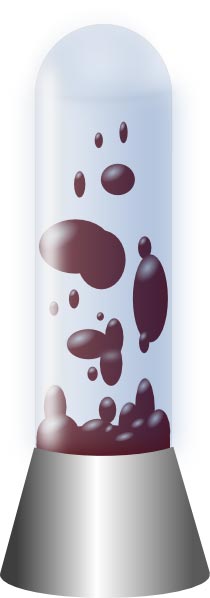
Make a Lava Lamp This Weekend!

Make a simple lava lampLooking for a fun and easy experiment to do with your kids this weekend? Well look no further. Do you remember being mesmerized by the mystery of a lava lamp when you were a kid? The brightly colored "lava" would float back and forth from the top and bottom of the lamp, combine with other "lava" blobs and then break away from them - it was seriously magical!

With just water, a clear plastic bottle, vegetable oil, food coloring and some Alka-Selzter (or other tablets that fizz) you can create your own lava lamp on your kitchen counter.

Once you have everything you need to get started, here's what you'll need to do:

  1. Pour some water into the plastic bottle until it's about a quarter full.
  2. Pour some vegetable oil into the bottle until it's just about all the way full. 
  3. Wait until the water and oil have clearly separated.
  4. Add around a dozen drops of your favorite color food coloring to the bottle.
  5. Observe the food coloring make its way through the oil and into the water, mixing.
  6. Cut an Alka-Selzter tablet into five or six smaller pieces and drop one of them into the bottle - things should start getting a little crazy, just like a real lava lamp.
  7. When the bubbling stops, add another piece of the Alka-Selzter tablet and enjoy!
If you're wondering what the science is behind this experiment, check this out: you know that oil and water don't mix very well (or at all), so the two separate from each other with the oil on top because it has a lower density than water. The food coloring is able to fall through the oil and mix with the water - key to this experiment! When you drop the Alka-Seltzer in, it releases small bubbles of carbon dioxide gas that rise to the top of the bottle, taking some of the colored water with it. The gas escapes when it reaches the top of the bottle and the colored water falls back to the bottom. To read more about the science involved, visit the Science Kids website.

Thursday, January 3, 2013

5 Science Stories to Watch in 2013

2012 held a ton of scientific milestones, advancements and discoveries. Take the landing of NASA's mobile laboratory on Mars, for example, that was no easy feat.  As always though, science is defined by its ability to move on and march forward; there is always more to learn and more questions to answer. After putting together 2012's most surprising (and significant) scientific events, the Smithsonian brought us the most exciting studies, projects and science developments to watch for in 2013. (And let me tell you, you'll be glad you were watching for these!)

1. Comet Ison: In September, a pair of Russian astronomers discovered a new comet heading in our direction. While it was only detectable with the most sophisticated microscopes then, now astronomers are predicting that when it passes by us and closely orbits the sun in November and December of 2013, it could be the astronomical sight of our lifetime. Sounds memorable to me!

2. Lake Vostok: For over a decade now, a team of Russian scientists have worked to drill just about 12,000 feet down into Antarctica with one goal: to obtain samples from the ultra-deep isolated subglacial lake known as Lake Vostek. It's estimated that the lake has been isolated for as long as 15 to 25 million years and after just reaching the water's surface last Antarctica summer, the team will return at the end of 2013 to drill fully into the lake and use a robot to collect water and sediment samples. This has potential to be some of the coolest H2O out there - literally!

3. Algae Fuel: Predictions say that 2013 will be the year! For vehicle fuels derived from algae of course. A small number of biofuel stations in the San Francisco area started selling algae-based biodiesel commercially for the first time last month, and after the product met state fuel standards, the plot program is expected to expand. This could be the best of two worlds for the states: there is a possibility that algae-based fuels could wean us off petroleum without using up precious food crops. Score! We'll definitely have to see how this one pans out.

4. Cosmic Microwave Background: Since there's still energy left from the Big Bang radiating thorough the universe, why not make some sense of it? The European Space Agency plans to use the Planck satellite to measure the leftover energy more precisely than ever before to help us better understand the formation of the universe. The Planck satellite actually launched in 2009 - and has already collected a wide range of valuable astronomical data and images - but has plans to release all of this data in early 2013. Finally - something we won't have to wait until the end of the year for!

5. Supercomputers: Who needs Superman when you have Supercomputers? Over the next year, it's speculated that various supercomputers around the world could have a remarkable impact at solving problems in health, the environment and other fields. Yellowstone, a 1.5 petaflops cluster computer in Wyoming, was installed this past summer and will spend 2013 crunching numbers to refine climate models and help us better understand how storms and wildfires move across the planet. Then there's Watson. Watson, IBM's world-famous Jeopardy winning supercomputer, is currently being trained by doctors (yes, trained) to recognize medical symptoms and serve as a diagnostic tool, providing treatment options based on case histories and clinical knowledge. Thus far, Watson has been trained to recognize breast, lung and prostate cancer. A win for technology and humanity!

Learn more about the five science stories to watch for in 2013.

Thursday, December 27, 2012

Science Classes of the Future

We've all heard it at least once in our lives: "When I was a kid..." Sure, there was once a time that you sat in a science classroom and watched your teacher scrawl on the board, drew a few pictures yourself on a worksheet and called it a day as the bell rang. Once you got home, you opened your textbook and studied more images of what was taught that day in class and that was that.

Now, there's much to be said about these teaching methods, but walk into a science classroom next year and as students learn how chemicals combine to form new substances they're manipulating foam or paper mache models to show how bonds are made, or moving electrons around on a computer screen or tablet, testing what happens when a transfer occurs.

As John Martin on CNN illustrates, science classrooms across America will begin to change next year when 26 states expected to adopt the Next Generation Science Standards (NGSS) implement the new standards in their classrooms. How students effected by NGSS learn will even be different than their older siblings did. 

The goal of NGSS is to have students gain an understanding of science, technology, engineering and math that makes them competitive on a global scale. So what does this mean? It means that students of the next generation will be making models, solving problems and getting messy - hands-on activities that lead to self-discovery and better understanding of subject matter.

Not surprisingly, the most noticeable differences will be seen in classrooms. Listening to lectures and then drawing a model or two will become a thing of the past. Instead, students will create models that represent a cell or an atom - often on a computer - and then use that representation to collect data and make predictions.

Now, if you're worried about the dollar signs that come along with NGSS, don't be. NGSS isn't about fancy, cutting-edge equipment; instead, it's about getting students engaged, involved and excited about STEM fields. Hopefully this will increase their likelihood to pursue STEM careers upon graduation from high school. 

Read Martin's entire report on the future of science classrooms and NGSS.

(And make sure you check out the video embedded in the article. Pay close attention to the first few seconds of the video and you'll see Swift scopes!)

Wednesday, December 19, 2012

Investing in STEM Opportunities for Students

Investing in STEM experiences and futures for today's youth is starting to become a trend that the education world doesn't want to end anytime soon. Just recently, students in Florida and Kentucky were given new opportunities to explore STEM through grants.

Thanks to AT&T Florida, nearly 150 Escambia County students will get the opportunity to explore STEM careers, through a grant received by the Escambia County Public Schools Foundation.  AT&T Florida gave the Consortium of Florida Education Foundations a $100,000 grant to create STEM workplace experiences.  

Pensacola News Journal reported that Ransom Middle and Escambia High will each receive $2,000 in grant money to give students hands-on learning opportunities outside the classroom that are directly linked to their coursework in STEM fields.

Ransom students benefiting from the grant money will build aquaponics systems to raise fish and provide plants for animals at the Roy Hyatt Environmental Center. An additional 22 multimedia student at Escambia High will take a hands-on tour of Nowak Enterprises, where they will get to see the multimedia production process. After that, using new cameras, students will come up with and produce short films for a project.

Over in Kentucky, the JPMorgan Chase Foundation provided their third grant through United Way of the Bluegrass to continue the successful STEM Academy, a community-based extended school day program in partnership with Fayette County Public Schools and First Bracktown, Inc.

The $70,000 grant was the third of a $170,000 total investmen by Chase in this program and will allow the STEM Academy to continue another year and expand to younger students. The program focuses on engaging African-American male middle school students in academically enriched out-of-school activities. To learn more on the grant, read Ky Forward's full report.

Monday, December 17, 2012

Active Explorer Moves STEM Learning to the Field

Active Explorer, a new mobile platform that aims to spark student's interests in the science, is taking STEM education to a whole new level. Now, smartphone in hand, students can leave the classroom and make science discoveries in the field. The American Association for the Advancement of Science (AAAS) partnered with Qualcomm's Wireless Reach initiative and mobile virtual network operator Kajeet to create the program.

This new program is what every science teacher has been hoping for. If you want your students engaged in what they're learning, there's no better way to do it than through self discovery. With Active Explorer, educators are able to log in to their computer a create a "quest" that asks their student to collect certain data with the program on their smartphones. Students can take pictures, record audio and video, create a map, make sketches or even write notes based on their observations. After they're finished collecting all their data, a mere push of a button will upload their data to their teacher and their own web account, enabling them to create slideshows, posters and e-books to share with classmates.

Active Explorer was piloted with eight teachers and 120 students across grades 4 and 7 in four Washington D.C. schools this October. District Administration reports that the program's easy-to-use design doesn't require teacher training and that it's intended for after-school use, when students are most likely to make real-world connections beyond the classroom. That's not to say that Active Explorer can't be used in the classroom, though! Active Explorer can also be integrated into classroom activities.

The program, was created to increase student interest in STEM and to keep the U.S. competitive in global education. Active Explorer also resembles what those in STEM careers are doing more and more frequently these days: using mobile platforms to collect their data.

Active Explorer runs on Android phones, which must be provided by the school district, but is free to download. You can learn more about the program at its website, www.active-explorer.com.


Monday, December 10, 2012

Swift's Motic Cameras Magnify Learning

Close this windowThe Vandalia Drummer News ran a great story this morning on how microscope cameras are impacting the learning atmosphere of Butler High School - one biology experiment at a time.

The cameras fit over the eyepiece of the school's existing microscopes and are linked via USB to a computer monitor at each lab station. While the students still mount their slides like normal, they manipulate them using the computer.  Since students don't have to pass the microscope back and forth, collaboration is encouraged and ample time is saved - two things every teacher values.

Butler High School biology teacher Kelly Stevens is quoted in the story as saying, "One of the downfalls of working with just one microscope is that only one student can see what's on the slide at a time. Now everyone sees the same thing in real time, and I can get around the classroom faster."

Coupled with Motic software, which allows students to capture video of their slides, make time-lapse photos and do side-by-side comparisons of their specimens, these cameras are generating a buzz at Butler. With the software, teachers can even "push" electronic documents from their computer to each lab station. Students then complete the assignment and "push" it back to their teacher, making for completely paperless labs. 

Stevens insists in the article that while the new technology is great, it doesn't do the learning for the students.

He told Vandalia Drummer News that, "students still have to learn how to use the microscopes; the technology doesn't do the work for them. We are doing the same things we have done in the past, this just takes it to a new level."

Can there really be a down side to this story? Unfortunately, yes. Just one classroom at Butler is hooked up with the new technology. This means that Stevens and the high school's other biology teachers must all share the space so all students benefit from the technology.

As Stevens put it, "The cameras have made us so much more efficient in the classroom. It would be nice if we could equip all of our biology classrooms with this technology."

Read the Vandalia Drummer News story.

Wednesday, November 28, 2012

Christmas Science Activities

Christmas cheer is usually accompanied by chilly weather that keeps us all inside where it's warm and toasty. Nostalgic: yes. Always the best scenario: no. Having your kids cooped up inside during their holiday break only leads to one thing: headaches. Take a look at these Christmas science ideas - they'll have you and your little ones entertained and on a path of discovery!

With just sugar, water, some string or a lollipop stick a jar and some sellotape, you can grow your very own Christmas crystals! Add some sparkles and food coloring for extra cool looking crystals. Or, make the string you're using to grown your crystals into shapes like circles and stars for homemade ornaments!

Take some time to explore a mini Christmas tree. Go out and purchase one of those darling mini conifer trees that you've always wanted to buy and grab some scissors, a ruler and a magnifying glass. Start by looking at the tree and describing it. Ask your children what normally happens to a trees' leaves in the winter. Then ask them what's different about this tree. This is an excellent activity that contains valuable lessons about evergreens and isn't too messy.

But if messy is what you're looking for, try making some candy cane goo with your kiddos. Cornflour, water, peppermint essence and red food coloring is what you'll need for this activity. You and you're mini scientists will marvel at how the goo feels like a solid one minute and then a liquid the next! Notice that when you ball the goo up it's a solid, but when you drop it on the floor it turns to a liquid again. 

If you're experimenting after Christmas, celebrate the new year with a firework in a glass. Now, before you dismiss this idea because it sounds dangerous, know that this activity is totally safe, very easy and looks just like a firework without the bang and sparkle. Here's what you'll need: a tall glass along with a smaller glass, warm water, oil and food coloring. The science bit of this activity illustrates water's inability to mix with oil and that oil is less dense than water. You'll have to do the experiment to figure out the rest!

Find even more Christmas science activities here.

Tuesday, November 20, 2012

Girl Scouts Attend "Cool Science"

U.S. Air Force photo by Julie Imada
Just last week, approximately 50 girls experimented with liquid nitrogen, Alka Seltzer rockets and food chemical mixtures at the U.S. Air Force Academy in Colorado. Supervised by cadets, these girls were ages 5-7 and all belonged to Girls Scout Daisy and Brownie troops. At the Academy's workshop - titled "Cool Science" - the girls were able to see first hand how fun science can be through creative chemistry and physics experiments illustrated by the cadets.  Can I get three cheers for the Air Force Academy?! 

The Girl Scouts spent the day at the Academy working on simple hands-on, educational experiments like how to make ice cream with liquid nitrogen, how a film canister reacts with Alka Seltzer and how many chemistry books a tower constructed of paper and masking tape can support. 

Cadet 4th Class Katherine Case saw the bigger picture when she said, "It's an important event because ti gives an introduction to young girls about the world of science, which is important because there aren't many females in the field."  She added, "when I was younger, I went to something called 'Girls in Engineering and Mathematic Science' that presented workshops on career fields in science and made me fall in love with the field. Now I'm pursuing that love."

These are the type of programs that we need to see more of! Programs that ignite an interest in STEM fields and leave young students with the desire to pursue a career in STEM. While it's important to target girls when they're young so that they don't grow up thinking that STEM fields are for boys, there should still be a push to get boys just as interested and fired up about STEM. 

The Air Force Academy has hosted this workshop every spring and fall for 10 years and hopes it continues to be a hit. Read more about the Nov. 10 workshop.

Do you know of great programs in your area that encourage young people to take an interest in STEM fields? Subscribe to our blog and let us know and you could win a Starbucks giftcard!

Friday, November 16, 2012

TI & Educate Texas Team Up on STEM Ed. Reform

Texas Instruments hosted "STEM Education: Key to Economic Success" on Nov. 1, the first of a series of education thought leadership programs, designed to inspire North Texas education leaders and corporate sponsors alike. For the sake of the future, let's hope this works - at least to some degree. The initial program was sponsored in collaboration with an initiative of Communities Foundation of Texas, Educate Texas.

Nationally recognized STEM expert Dr. Shirley Malcom was the featured speaker and she attracted 35 engaged STEM education leaders for the presentation and following Q&A. Dr. Malcom heads Education and Human Resources for the American Association for the Advancement of Science (AAAS). At the event held on Nov. 1 at the Communities Foundation of Texas, Dr. Malcom was interviewed by Dee Chambliss of Educate Texas, an alliance of public and private groups that share the common goal of improving public education.

As reported by Educate Texas, here's some of strategies Dr. Malcom suggested to get students interested in science and engineering:

  • Positioning these fields as "helping professions." Many students today, particularly girls who are often underrepresented in STEM, are looking to "help people and make a difference in the world," she said.
  • Starting early in preschool and encouraging young children in simple math in everyday activities (i.e. counting the plates when setting the table, sorting socks).
  • Introducing science and math to students on their own terms (i.e. digital arts, using new tools).
  • Using the entire community for teaching and learning (i.e. Scouts, libraries, museums).
Dr. Malcom urged corporate supporters to make their stance on this issue known. Specifically she told them to "have more voice and make clear by their presence that there is advocacy for this - bring a voice of transformation." She also recommended that they "demand evidence of success just as if you were buying anything else." Dr. Malcom left those in the STEM fields with a simple, but more and more clear, message: be "visible and present to young people."

"It's a matter of helping people understand - parents, grandparents and students - the opportunities that exist to guide them and support them. It's everything from considering the toys we give to taking kids to libraries," Dr. Malcom said. "You can't teach everyone everything they need to know, but you can situate them for a lifetime of learning."

Well said, Dr. Malcom. Take note, people! STEM learning doesn't have to be dry, boring and for the boys. Today it can be fun, engaging, interactive and hands-on. In fact, this is more true today than it ever has been. And it involved beginning when children are young; before they can develop preconceived notions about science and match before ever giving them a chance. If you have suggestions on how to inspire today's youth and get them involved in STEM, let us know and you could be featured on our blog.

Wednesday, November 14, 2012

Swift Helps Drive Science Education

In this changing classroom environment, we understand that teachers need more than products, they need resources and solutions. Let us be your information-hub and offer you the STEM support you need.

From handouts to presentations and microscopy lesson plans, Swift's resource center is where educators, students and professionals need to be. "Smart Teachers Expect More" and they get it here. Discover your STEM classroom with us. 

Swift is doing its part in driving science education. Let us know what are you doing to further STEM education today!


Tuesday, November 13, 2012

Resources for Women in STEM

By now, just about everyone who's anyone has reported on the low percentage of women in STEM career fields. In 2011, the Economics & Statistics Administration found that less than 25 percent of STEM jobs are held by women, even though they make up more than half of the workforce and college degrees in the nation. 

The United State can no longer deny that a glass ceiling is looming over these industries and that men and women are like are doing their best to throw stones at it. I won't discount the progress that has been made over the past few decades, but I will say that more efforts need to be made to ensure a more equitable place for women in these traditionally male-dominated industries. This ideal is something that these 40 essentials share!

Check out 40 Important Online Resources for Women in STEM!