Showing posts with label Education Revolution. Show all posts

Thursday, January 10, 2013

Official Launch: STEM Students & STEM Jobs

STEMconnector - The One Stop Shop for STEM EducationYou aren't going to want to miss this. On January 30 (that's a Wednesday, people), STEMconnector and My College Options will team up to host a live webinar, presenting the findings of their national report, Where are the STEM Students? What are their Career Interests? Where are the STEM Jobs? Even better, the webinar will be a live broadcast of the event launch in Washington, DC hosted by the American Association of University Women (AAUW).

What's great about this new report is that it identifies the STEM interests of more than one million U.S. high school students interested in pursuing STEM careers, and links them to increasing demand for STEM jobs - which will be over 16 million when 2018 rolls around. And if you really want to dive into the minds of students, the report does that for you too. In-depth profiles of more than one million students interested in STEM majors and careers with breakouts for all 50 states and the District of Columbia will provide educators with more insight into this generation's minds than ever before. Sounds like a win for everyone involved!

The report was designed to motivate students interested in STEM fields by providing a breakdown of "hot" and up and coming STEM jobs, salary figures and a projection of the future STEM market. 

The "Town Hall" style webinar will begin at 3:00 p.m. CT on Jan. 30 and run until 4:00 p.m. CT. At 2:45 p.m. CT on Jan. 30, you will be able to join the WebEx session by visiting STEMconnector.org/townhall and registering. You can also join in the Twitter Chat on Jan. 30. The twittersphere will begin to chat about the discussion at 2:00 p.m. CT on Jan. 30 using hashtag #WHERESTEM. @STEMconnector will be moderating the live chat.

This is an excellent opportunity to learn about today's students and generate ongoing STEM interest and excitement; let's do it!

Thursday, January 3, 2013

5 Science Stories to Watch in 2013

2012 held a ton of scientific milestones, advancements and discoveries. Take the landing of NASA's mobile laboratory on Mars, for example, that was no easy feat.  As always though, science is defined by its ability to move on and march forward; there is always more to learn and more questions to answer. After putting together 2012's most surprising (and significant) scientific events, the Smithsonian brought us the most exciting studies, projects and science developments to watch for in 2013. (And let me tell you, you'll be glad you were watching for these!)

1. Comet Ison: In September, a pair of Russian astronomers discovered a new comet heading in our direction. While it was only detectable with the most sophisticated microscopes then, now astronomers are predicting that when it passes by us and closely orbits the sun in November and December of 2013, it could be the astronomical sight of our lifetime. Sounds memorable to me!

2. Lake Vostok: For over a decade now, a team of Russian scientists have worked to drill just about 12,000 feet down into Antarctica with one goal: to obtain samples from the ultra-deep isolated subglacial lake known as Lake Vostek. It's estimated that the lake has been isolated for as long as 15 to 25 million years and after just reaching the water's surface last Antarctica summer, the team will return at the end of 2013 to drill fully into the lake and use a robot to collect water and sediment samples. This has potential to be some of the coolest H2O out there - literally!

3. Algae Fuel: Predictions say that 2013 will be the year! For vehicle fuels derived from algae of course. A small number of biofuel stations in the San Francisco area started selling algae-based biodiesel commercially for the first time last month, and after the product met state fuel standards, the plot program is expected to expand. This could be the best of two worlds for the states: there is a possibility that algae-based fuels could wean us off petroleum without using up precious food crops. Score! We'll definitely have to see how this one pans out.

4. Cosmic Microwave Background: Since there's still energy left from the Big Bang radiating thorough the universe, why not make some sense of it? The European Space Agency plans to use the Planck satellite to measure the leftover energy more precisely than ever before to help us better understand the formation of the universe. The Planck satellite actually launched in 2009 - and has already collected a wide range of valuable astronomical data and images - but has plans to release all of this data in early 2013. Finally - something we won't have to wait until the end of the year for!

5. Supercomputers: Who needs Superman when you have Supercomputers? Over the next year, it's speculated that various supercomputers around the world could have a remarkable impact at solving problems in health, the environment and other fields. Yellowstone, a 1.5 petaflops cluster computer in Wyoming, was installed this past summer and will spend 2013 crunching numbers to refine climate models and help us better understand how storms and wildfires move across the planet. Then there's Watson. Watson, IBM's world-famous Jeopardy winning supercomputer, is currently being trained by doctors (yes, trained) to recognize medical symptoms and serve as a diagnostic tool, providing treatment options based on case histories and clinical knowledge. Thus far, Watson has been trained to recognize breast, lung and prostate cancer. A win for technology and humanity!

Learn more about the five science stories to watch for in 2013.

Friday, December 28, 2012

Schools Going Digital by 2017

The debates over going entirely digital in the classrooms of today's and tomorrow's students can get pretty heated these days. A good percentage of educators and other advocates of e-textbooks are pushing for the transition. The opposition is standing its ground just as firmly, though. 

In a report released by the State Educational Technology Directors Association (SETDA) in September titled, "Out of Print : Reimagining the K-12 Textbook in a Digital Age," it was said that textbooks should be a thing of the past by 2017. The report goes on to suggest that states and districts begin making the transition from print to digital instructional material with the next major textbook adoption cycle (which could be soon!), completing the transition by 2017.

Today's youth loves the digital realm and are being introduced to it at an ever-increasing younger age. Just a couple weeks I was in Toys-R-Us shopping for my nephew when I saw a toddler-proof iPad cover. I stood there for a second before telling myself, "You really shouldn't be surprised here." Take a look at the thing for yourself. This just shows that it's never too young to go digital.

Process this for a second: currently, states and districts spend around $5.5 billion on instructional material each year and many students are using textbooks with content that is seven to 10 years old. With the adoption of digital content, schools would be able to update material without any extra print costs. Hello, cost effectiveness!

Further, digital material can be more interactive than print material. Instead of being limited to text and a few illustrations, students can now access video clips, animations and virtual labs. Even better, content can be personalized to accommodate individual student learning needs and abilities. For instance, there are options to hear the text read aloud, instantly look up unfamiliar words and change the font size.

Now, to the teachers. There are major benefits for them too. With digital material, teachers won't be tied down to a singular textbook and the lessons it provides. They'll be able to bring different lessons together and will have the opportunity to get involved in creating and refining their classroom content. That has to sound good to almost every teacher out there!

The 2017 adoption target date was made so schools and districts could create a realistic plan for implementation. So of you oppose the idea of digital textbooks, it looks like they're making their way into classrooms whether you like it or not. Jumping on board might make the transition a little easier. 


Tuesday, December 18, 2012

Cheers to Computer Science Education Week!

Here's to Computer Science Education Week! Celebrated last week, CSEdWeek is designated as the second week of December to honor Admiral Grace Murray Hopper's birthday, December 9, 1906, as well as her extraordinary contributions to the computer science field. Hopper was a visionary in the field of computer science and her engineering in programming languages and computer system standards laid the foundation for advancements in computer science from the 1940s - 1970s. Last week, 3,398 people signed the pledge for CSEdWeek.

So what does it all mean? The Triangle Coalition for Science and Technology Education collaborates with various organizations and individuals for better STEM education and put together the facts last week. Here's some of what they found.

The Association for Computing Machinery, one of the core partners of CSEdWeek, has assembled a collection of statistics on the nation's computer science education and job outlook:

  • 150,000 job openings in computing annually
  • 1/2 of all STEM jobs will be in computing in 2020
  • 22% job growth expected in computing by 2020
  • $78,730 earned on average by computing professionals in 2011
  • 19% of high school students took computer science courses in 2009, down 6% from 1990
  • 9 states nationwide award "core" credit for high school computer science courses
  • AP computer science exams comprise less than 1% of all AP exams taken

They added that jobs in computing are among the fastest growing and highest paying of almost any other profession. Despite these opportunities, the computing field faces a shortage of skilled workers and difficulty in keeping students in the pipeline. With significant barriers starting at the K-12 level, the number of students exposed to computer science is declining each year, and only a small percentage are receiving a rigorous education in the subject.

I know what you're thinking, what about the breadth of computer science jobs in the future? What's the story where you live? Well, the National Center for Women & Information Technology (NCWIT) has gathered key computing education and jobs indicators by state and congressional district and assembled them into an interactive map and other easily accessible tools. Individuals can use the data to understand their local situation and to advocate more effectively for changes they would like to see in their schools, colleges and universities. Find out how your state or district ranks in computer science education and jobs at www.ncwit.org/edjobsmap.

To check out resources, events, articles and more about computer science education, visit www.csedweek.org.

Friday, December 14, 2012

Race to the Top District Winners Announced!

Earlier this week, the Education Department announced the 16 winners of the Race to the Top school district grants (RTTD). 61 Finalists had been announced recently out of an original 372 districts that turned in applications in November. A total of $400 million was due to go out, and winners ranged from $10 million to $40 million for a period of four years, depending on the population of the given district. The winners included urban and rural districts, small districts and large consortia, and public and charter schools. The only large, urban school district to win was Miami-Dade (FL), which also just won the Broad Prize.

Education Week reported that U.S. Secretary of Education Arne Duncan said the winners' circle includes "a really good mix" of both districts that are already education-reform leaders, and districts that have not received as much attention.
The winners, by order of total mean score, are as follows:

  • Carson City, NV (208.33)
  • New Haven Unified, CA (207.67)
  • Miami-Dade, FL (207.00)
  • Puget Sound Consortium, WA (205.33)
  • Guilford County, NC (205.33)
  • Metropolitan School District of Warren Township in Indianapolis, IN (205.00)
  • IDEA public schools, TX (203.00) [charter schools]
  • Charleston County, SC (201.67)
  • Harmony Science Academy consortia, TX (201.67) [charter schools]
  • St. Vrain Valley, CO (200.33)
  • Galt Joint Union, CA (199.67)
  • Iredell-Statesville, NC (199.67)
  • Middletown City, NY (199.33)
  • KIPP, DC (199) [charter schools]
  • Green River Regional Education Cooperative, KY (197)
  • Lindsay Unified, CA (196.33)

Congratulations to all of these school districts!
Read Education Week's full report.

Tuesday, December 4, 2012

Building a STEM Nation with "MissionSTEM"

While we all know that STEM fields need to be the focus of education reform these days, the statistics never get easier to take in. In 2009, more than 1.5 million U.S.citizens earned bachelor's degrees, but only a mere 4.4 percent were in engineering and just a small 1.1 percent were in the physical sciences.  Further, only 2.4 percent of the undergraduate degrees earned were in computer science and mathematics represented just 1.0 percent of degrees.

Not surprisingly, the National Science Foundation 's National Center for Science and Engineering Statistics reported that a very small 0.8 percent of all bachelor's degrees earned in 2009 were by women in engineering and 0.2 percent of those earned were by African Americans.

For a country that wants to maintain status as a world leader in STEM, these numbers aren't just startling, they're unacceptable. Just recently, NASA took these statistics to heart and set out to change them. NASA Administrator Charles Bolden said that NASA wants "the nation's STEM degree programs to be more welcoming, supportive and accessible to all students."

With that in mind, NASA launched MissionSTEM.nasa.gov, a Web site created by NASA'a Office of Diversity and Equal Opportunity, to assist colleges and universities in strengthening their STEM programs.  The site connects NASA with its grantees, professional STEM organizations and other interested stakeholders in order to creatively address issues like recruitment and retention of diverse students.

Way to go, NASA! Emerging programs like this one and Change the Equation's iONFuture are steps in the right direction for the nation's STEM future. Combined with NGSS efforts and political legislation, the United States should be starting to move up the competitive STEM ladder.

So, where will we find the future of STEM? As Bolden says, "We will find it in every community, in every university and college and in students of every socio-economic background. The talent is out there. It always has been."

Creating programs like MissionSTEM is just the start. The rest of the battle involves making the commitment to encourage and support American students to pursue their STEM dreams. 


Friday, November 16, 2012

TI & Educate Texas Team Up on STEM Ed. Reform

Texas Instruments hosted "STEM Education: Key to Economic Success" on Nov. 1, the first of a series of education thought leadership programs, designed to inspire North Texas education leaders and corporate sponsors alike. For the sake of the future, let's hope this works - at least to some degree. The initial program was sponsored in collaboration with an initiative of Communities Foundation of Texas, Educate Texas.

Nationally recognized STEM expert Dr. Shirley Malcom was the featured speaker and she attracted 35 engaged STEM education leaders for the presentation and following Q&A. Dr. Malcom heads Education and Human Resources for the American Association for the Advancement of Science (AAAS). At the event held on Nov. 1 at the Communities Foundation of Texas, Dr. Malcom was interviewed by Dee Chambliss of Educate Texas, an alliance of public and private groups that share the common goal of improving public education.

As reported by Educate Texas, here's some of strategies Dr. Malcom suggested to get students interested in science and engineering:

  • Positioning these fields as "helping professions." Many students today, particularly girls who are often underrepresented in STEM, are looking to "help people and make a difference in the world," she said.
  • Starting early in preschool and encouraging young children in simple math in everyday activities (i.e. counting the plates when setting the table, sorting socks).
  • Introducing science and math to students on their own terms (i.e. digital arts, using new tools).
  • Using the entire community for teaching and learning (i.e. Scouts, libraries, museums).
Dr. Malcom urged corporate supporters to make their stance on this issue known. Specifically she told them to "have more voice and make clear by their presence that there is advocacy for this - bring a voice of transformation." She also recommended that they "demand evidence of success just as if you were buying anything else." Dr. Malcom left those in the STEM fields with a simple, but more and more clear, message: be "visible and present to young people."

"It's a matter of helping people understand - parents, grandparents and students - the opportunities that exist to guide them and support them. It's everything from considering the toys we give to taking kids to libraries," Dr. Malcom said. "You can't teach everyone everything they need to know, but you can situate them for a lifetime of learning."

Well said, Dr. Malcom. Take note, people! STEM learning doesn't have to be dry, boring and for the boys. Today it can be fun, engaging, interactive and hands-on. In fact, this is more true today than it ever has been. And it involved beginning when children are young; before they can develop preconceived notions about science and match before ever giving them a chance. If you have suggestions on how to inspire today's youth and get them involved in STEM, let us know and you could be featured on our blog.

Thursday, November 15, 2012

More Students Interested in AP Science

An Advanced Placement Biology class in Virginia was recently standing-room-only as 27 students crowded around lab tables. Sound like a lot of students? That very same class had 30 students in it the next period. Woodside, the school where so many eager students are enrolling in more science AP classes, is among a group of schools nationwide that are pushing to expand access to AP match and science courses.

With STEM jobs on the rise more than ever before, the push for more AP math and science courses is coming at the right time. Just last year, the U.S. Commerce Department predicted that STEM jobs will grow by 17 percent between 2008 and 2018, compared with just under 10 percent for others.

Recent studies point out the pitfalls in STEM classrooms It's been suggested that U.S. students' match and science skills are slowly growing: in 2011, just 35 percent of eighth-graders were proficient in math and 32 percent in science, according to the U.S. Education Department's National Assessment of Educational Progress (NAEP). 

Another downer: last year, Achieve, made up of business and government officials, found that a mere 20 states (yes, not even half of them) and the District of Columbia required students to complete a "college-and-career-ready" curriculum to earn a diploma.

More schools need to make Woodside their example. With AP courses open to all students regardless of grade-point average, students recruited heavily and trained after school, Woodside treats AP like a sports team. Since many students don't know what AP is or think it's for the valedictorians of the class, this approach can be very effective. 

Woodside also picks  up the cost of the annual exams, making it hard for students to drop the AP courses once they're enrolled. If a student persists, both teachers' and parents' signatures are required for the drop, allowed only after a student attends three tutoring classes. Even then, parents have to meet with a counselor to approve the withdrawal. As you can imagine, it rarely gets that far.

So here's the proof, people. The result of this approach is a 75 percent rise since 2006 in the number of students taking advanced math and science. Higher percentages of students in AP classes can only lead to one good thing: student success (even if your students don't score the highest on the AP exams). Read more about Woodside's AP approach.

Wednesday, November 14, 2012

Swift Helps Drive Science Education

In this changing classroom environment, we understand that teachers need more than products, they need resources and solutions. Let us be your information-hub and offer you the STEM support you need.

From handouts to presentations and microscopy lesson plans, Swift's resource center is where educators, students and professionals need to be. "Smart Teachers Expect More" and they get it here. Discover your STEM classroom with us. 

Swift is doing its part in driving science education. Let us know what are you doing to further STEM education today!


Wednesday, October 24, 2012

Community Colleges Crucial for New Scientists

It's been regurgitated more times than you can count the past few years: the United States needs to grow and diversify it's STEM workforce if it wants to remain competitive with other countries and the new global economy. Something I bet you haven't heard, however, is that community colleges are starting to become more and more important in this process. 

The stats say that more than 50 percent of lower-income and racial-minority students, along with 40 percent of all students, start off at community college. Of all these students, a mere 10 percent even consider a pathway in STEM. And usually, the students that do picture themselves in a STEM field initially change their minds as their studies progress.

The numbers get worse when you look at women. Of the 500,000 associate's degrees earned each year by women at community college's, a depressing five percent are in STEM fields.

Since finances are so important to a number of today's students, community colleges have the flexibility the budget-savvy student needs. The problem: while enrollment at community colleges is up, it's in large part due to one-year technical training programs. Not enough students are transferring to universities to obtain four-year degrees (what you need to get a job in the high-demand STEM fields).

So, how do we get get students to transfer to four-year universities after finishing up at a community college? That's were it gets tough...right now alignment between community colleges and four-year universities is the exception rather than the rule. Frequently, promising future scientists leave their major because certain credits don't transfer or because they don't feel invited into the science community at the university they're looking at. Alignment efforts couple with proper advising can change this!

Read some of Becky Wai-Ling Packard's commentary on the subject.


Monday, October 22, 2012

"Keeping the 'T' in STEM"

In 1994, Laura Reasoner Jones started an after school club called Girls Excelling in Math and Science (GEMS Club) to encourage girls to engage in STEM activities and spark their interest in STEM career fields.  Over the past 18 years, Jones says they've had a ball and the girls have thrived.

This year, Jones wants to do something she hasn't done before: motivate girls to embrace technology as creators, not users. Since it's been easy to offer experiences and activities in the other three STEM components (science, engineering and math) Jones wants to focus her energy on breaking down the barriers that keep women and young girls away from technology.

Jones explains that early exposure to IT can build confidence in girls, and encourage them to pursue future educational opportunities in the field. Even better, careers in IT are plentiful, high-paying and meaningful.

Despite the facts, enrollment and participation in computing classes has been dropping steadily since the 1980s, and fewer and fewer women are graduating with computer science or IT degrees. There's two problems here: girls are missing out on great career opportunities, and the world is missing out on their talents and perspectives as women.

Jones says that there are several resources we can look at to overcome this dilemma. The National Center for Women and Information Technology offers educators 60 downloadable ideas, including Computer Science in a Box, which teaches the premises of computing without the use of machines. Then there's Alice (alice.org), a program that encourages children, particularly girls, to explore computer science and programming.

While the programs Jones mentions may spark an interest in IT, a girl won't really be enticed unless she feels comfortable in the area. Jones encourages everyone to look around the computer lab/room where girls learn. If the room looks like a locker room or "man cave," educators may want to consider transforming the room to a place where girls and boys of all cultures are welcome with posters of successful men and women alike. 

We can all work together to make technology inviting and not intimidating for girls - let's do it!

To read more of Jones' commentary, click here.

Thursday, October 18, 2012

Abdul-Jabbar Promotes STEM Education

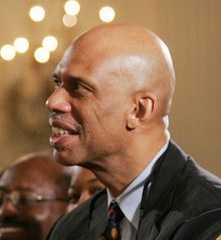
File:Kareem Abdul Jabbar crop.jpgThat's right, Kareem Abdul-Jabbar, the NBA's all-time leading scorer, will serve as California's After-School STEM Ambassador for the next year, promoting the importance of STEM subjects.

"If America is to maintain our high standard of living, we must continue to innovate," Abdul-Jabbar said in a statement published by Education Week. "We are competing with nations many times our size, and STEM learning represents the engines of innovation. With these engines, we can lead the world, because knowledge is real power."

In his new role of After-School STEM Ambassador, the NBA great will make appearances at after-school programs around California to promote STEM education. This will be just another effort on Abdul-Jabbar's part, who has invested a considerable amount of time promoting STEM education the past few years. Through his Skyhook Foundation, Abdul-Jabbar has been actively pushing the importance of STEM education and STEM-related fields.

Abdul-Jabbar was spotted at the U.S. News and World Report's STEM Conference in Dallas earlier this summer pointing out the cultural shift that's necessary to make STEM jobs more attractive to younger generations - especially those in lower-income communities. 

Abdul-Jabbar's role as STEM ambassador in California could take on a particularly high importance in turning around the state's high-quality science instruction. We'll have to stay tuned to see how it goes!

Read more about Abdul Jabbar's involvement in STEM education here.

Tuesday, October 16, 2012

Project Lead The Way Makes STEM History!

Project Lead The Way (PLTW) is the leading provider of rigorous and innovative STEM education curricular programs used in middle schools and high schools. The organization recently released the official 2012-2013 school year registration numbers and what the data reflected was astounding: nearly a 20 percent increase in schools offering PLTW courses to America's students was seen. Cheers to a small victory in STEM education!

For the 2012-2013 school year, PLTW added 1,004 new programs and 747 new schools. The addition of these programs bring the total number of PLTW programs to 5,211. The total number of middle and high schools offering PLTW to their student's is now 4,782 - numbers higher than ever experienced in PLTW history!

The programs mentioned refer to the organization's three middle and high school offerings: the high school engineering program, Pathway to Engineering (PTE); the high school Biomedical Sciences (BMS) program; and the middle STEM curriculum, Gateway to Technology (GTT).

This sudden increase in PLTW programs in America's schools is hopefully a sign of the nation's education priorities and an indication of more STEM growth to come.

Read more about PLTW and their most recent numbers.

Thursday, October 4, 2012

We are All Born Scientists

Scientists at the University of California, Berkeley suggest that young children think and learn about their surroundings just like scientists think and learn in advanced experiments.  The parallel isn't hard to see if you really think about it.  Scientists form hypotheses, test them, analyze their findings and learn from their actions as well as the actions of others. Cue child's play!

Kids approach the world and their surroundings on a learn by doing basis. The scientists at Cal state that youngsters learn using probabilistic models, engaging with the world through patterns and using those patterns to make predictions. Just like scientific experiments can, this sort of behavior can lead to drastic reformulations of different world views.

This new research adds to a growing body of evidence that early childhood education is crucial. It also supports the notion that making preschool more academic can be detrimental and shy children away from STEM right out of the gates. Alison Gopnik, a professor of psychology and philosophy at Cal and the lead author of the new study, says the children, especially of preschool age, shouldn't necessarily participate in strict lessons and take home flash cards. Instead, she thinks they should be encouraged to examine cause and effect by playing with things and seeing how they work.

Gopnik's research was supported by the National Science Foundation (NSF) and published in Science last Friday.

To read more about the study and what Gopnik had to say about it, check out Rebecca Boyle's article.

Monday, October 1, 2012

New Nanotechnology Center at UT Austin

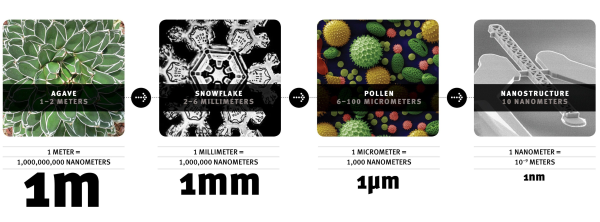
nanometer chart
Watch out nanotechnology! After a newly-announced $18.5 million National Science Foundation (NSF), UT Austin is well on  its way to becoming one of the leading nanotechnology research centers in the United States. The new NSF Nanosystems Engineering Research Center will be known as the Nanomanufacturing Systems for Mobile Computing and Mobile Energy Technologies and will focus on things like mobile computing, nanomanufacturing, electromagnetic systems and environmental and health sensing.

William Powers Jr., the president of UT Austin, said:

"Nanotechnology is one of the most important frontiers there is. Nanoscale breakthroughs will usher in inventions and solutions we can only dream of today, and thanks to the National Science Foundation and our academic corporate partners, The University of Texas at Austin will be right at the cutting edge.

To read more about the new nanosystems engineering research center, visit Biotechnology Calender, Inc.

Monday, February 27, 2012

Cultivate a Professional Tutor State of Mind

Teachers, have you run into problematic children who just refuse to learn in your class? Sometimes even after expending ginormous effort into preparing lesson plans and elaborately engaging activities, some children will still stubbornly resist to learn (or perform). Fortunately, this scenario tends to diminish as kids grow older. Some kids simply grow out of it. Others settled for the fact that they must learn to earn a future. And still others stumble to get by. Is this really it? Must these students submit to the dismal "reality" and be "forced" to learn?


Fortunately, education is the combined efforts of both teachers and parents. And the exciting news is, last we checked, anyone can adopt the mindset of a professional tutor! Whether you are a beginner educator,  a veteran teacher, or a concerned parent, you are able to tackle universal problems that children struggle in their process of learning. 


Marian Ruben, who recently published How to Tutor Your Own Child, offers some tried-and-tested, distilled advice for the parents who are dealing with kids who find learning boring. In one of her chapter's, the ingenuity of Marina's approach lies in her emphasis of basics, which concerns 

  1. the parents to show that they care about learning to their child, and 
  2. the parents to acquire the mindset of a professional tutor
(If you don't love learning, for the sake of your child, pretend you do.)

In case you find the talk above too fluffy for your pragmatic-liking, there are some practical pointers she provides to tackle everyday problems you encounter. For instance, how you may take opportunities to show your enthusiasm in learning in various contexts:
Here are other ways to show that you love learning:
  • Value learners. Whether it means making positive comments about the "nerd" character in a television show or praising the efforts of a neighbor who has decided to study gardening, send your child the message that you admire people who make the choice to investigate and acquire knowledge.
  • Ask follow-up questions. Let's say uncle Frank visits and talks about his interest in phrenology. Don't just go "uh huh." Find out what phrenology is, why he started studying it, and whether anyone still really thinks that you can measure architectural talent by skull shape.
Even if you don't really believe any of the above, the book is full of little gems worthy of a hearty chuckle: (And let's be honest, in the profession of teaching, who doesn't need a good chuckle?) 

STUDENT: Why do I have to study Portuguese? That's not fair.
BAD PARENT-TUTOR: Life's not fair.
GOOD PARENT-TUTOR: What if Brazil invades America? You'll be able to translate!


Lastly, we leave you with a quote to ruminate to start off the week:
taking action and taking the right action can be two very different things. - Cal Newport (Study Hacks)


(excerpt via How To Tutor Your Own Child, Study Hack Blog)