Showing posts with label Online Teaching Resources. Show all posts

Tuesday, December 4, 2012

Building a STEM Nation with "MissionSTEM"

While we all know that STEM fields need to be the focus of education reform these days, the statistics never get easier to take in. In 2009, more than 1.5 million U.S.citizens earned bachelor's degrees, but only a mere 4.4 percent were in engineering and just a small 1.1 percent were in the physical sciences.  Further, only 2.4 percent of the undergraduate degrees earned were in computer science and mathematics represented just 1.0 percent of degrees.

Not surprisingly, the National Science Foundation 's National Center for Science and Engineering Statistics reported that a very small 0.8 percent of all bachelor's degrees earned in 2009 were by women in engineering and 0.2 percent of those earned were by African Americans.

For a country that wants to maintain status as a world leader in STEM, these numbers aren't just startling, they're unacceptable. Just recently, NASA took these statistics to heart and set out to change them. NASA Administrator Charles Bolden said that NASA wants "the nation's STEM degree programs to be more welcoming, supportive and accessible to all students."

With that in mind, NASA launched MissionSTEM.nasa.gov, a Web site created by NASA'a Office of Diversity and Equal Opportunity, to assist colleges and universities in strengthening their STEM programs.  The site connects NASA with its grantees, professional STEM organizations and other interested stakeholders in order to creatively address issues like recruitment and retention of diverse students.

Way to go, NASA! Emerging programs like this one and Change the Equation's iONFuture are steps in the right direction for the nation's STEM future. Combined with NGSS efforts and political legislation, the United States should be starting to move up the competitive STEM ladder.

So, where will we find the future of STEM? As Bolden says, "We will find it in every community, in every university and college and in students of every socio-economic background. The talent is out there. It always has been."

Creating programs like MissionSTEM is just the start. The rest of the battle involves making the commitment to encourage and support American students to pursue their STEM dreams. 


Friday, November 2, 2012

Making Sense of Density

Is teaching the concept of density to your students a struggle? Check out how Mr. Treadgold's 7th grade class uses a hands-on project to learn the abstract concept of density. They measure the mass and volume of different cylinders, create their own computerized spreadsheets in Excel for data and enter the formula to calculate density. By the end of the experiment, they're able to conclude on their own that density will not change as the shape and size of an object change, as long as the material it's made of stays the same.

Wednesday, October 31, 2012

40 STEM iPad Apps for Kids

With the need for students looking towards a STEM career path growing, it's no surprise that technology has figured how to do their part. With iPad apps that revolve around STEM appealing to children, there's a whole new way for them to learn without even knowing it.

These apps are great for giving your child practice, repetition and reinforcement: something that will definitely come in handy during the upcoming holiday breaks!

Categorized by math apps and science, technology and engineering apps, this site is a great tool for parents and educators a like.  Check it out!

Monday, October 29, 2012

Today's Education Means Twitter School

That's right, I said it: Twitter School. We all know that social media is paving a way for itself in the classroom, and it was more obvious than ever before at the Advancing Improvement in Education Conference this month in Austin, Texas. As fifteen-year-old Adora Svitak stood in front of nearly 3,000 teachers, principals and administrators and gave them the tools they needed to implement Twitter and Facebook into their schools, the social media sphere rejoiced.

Svitak acknowledges that students today "live, work and play" social media." She also noted to her audience that when the characteristics present in social media don't exist in the classroom, it's easy to tune out.

Taking note, first-time Twitter users in the audience learned how to sign up and began tweeting - thanking Svitak for her presentation, hashtag and all.

Svitak wrapped things up by saying, "Any good teacher knows how important it is to connect with students and understand our cultures. That could start with something like pursuing Reddit and knowing popular memes...Social media has definite benefits for education."

To read more and look at the to must-have apps for successful high school students, click here.

Tuesday, October 9, 2012

STEM Vital Signs: Texas

As a leading high-tech state, Texas businesses need more STEM talent to stay competitive than ever before. Despite economic downturn, STEM skills are still in high demand in Texas. In fact, there are 2.5 STEM jobs for every one unemployed person compared to 3.3 unemployed persons for every one non-STEM job. Hello, people! Improving student performance in STEM in K-12 is crucial to help not only the Texas economy grow, but the entire nation's.

There are some highlights here, though. Since 2004, the State of Texas, with private sector support, has invested more than $100 million to create 65 STEM Academies serving more than 25,000 students. Texas also recently adopted new math standards and more rigorous assessment and it's paying off. Texas students are spending more time on elementary science, are participating more in hands-on learning and are making progress in math. 

Change the Equation's 2012 Vital Signs measure the health of the K-12 STEM enterprise state by state. Vital Signs was created in collaboration with the American Institutes for Research and was made possible by generous support from the Bill and Melinda Gates Foundation.

To look at Change the Equation's full report on the STEM Vital Signs in Texas, click here.

To find out what the STEM Vital Signs are like in your state, click here.

Monday, October 8, 2012

Why STEM Education?

It's no secret that the U.S. needs to improve STEM education for future generations of youngsters. But, why is it so important? For starters, STEM jobs are expected to increase at a rate of 17 percent per year while non-STEM jobs are expected to decline by 10 percent. STEM careers will keep America competitive not only now, but in the future, and we have to get the nation's students ready for that future now.

U.S. students currently sit mid-pack in international comparisons of math and science performance. This isn't headline news anymore, but reports are now showing that some schools that are considered successful aren't keeping the pace in STEM subjects. Recently, a mere one-third of U.S. eighth graders showed proficiency in math and science.

So, what can we do? It's all about turning the tide and making STEM education more successful and desirable in the United States!

Start by sowing STEM seeds early. Students who have exciting and memorable experiences in STEM at an early age are more likely to stick with it and follow through. Studies suggest that if a student is interested in STEM in eighth grade, they're three times more likely to pursue a STEM degree.

Show students that STEM careers matter. Underrepresented groups like women and minorities from low-income areas need to see that there are people with similar backgrounds to them that turned things around or made it in a STEM-related career. This helps spark their interest.

Explain that STEM education means opportunity. Job security means more today than ever before and finding a job quickly after graduation is enough to entice any young person. More than 1 million additional graduates with STEM degrees will be needed to fill the growing number of jobs that require those skills - students need to know that now!

To check out Greg Tucker's full report on the issue, click here.

Friday, October 5, 2012

Darwin Day 2013 is Approaching!

Attention teachers, administrators, educators and science enthusiasts: do you want to bring cutting-edge evolutionary science to your school and community? Who wouldn't?! Check out NESCent's 2013 Darwin Day Roadshow and apply to be a part of it.

NESCent (The National Evolutionary Synthesis Center) is an evolution center funded by the National Science Foundation. To celebrate Charles Darwin's contributions to science and society, NESCent sends their scientists on the road every year during "Darwin Day" (the annual, worldwide celebration of Darwin's birthday, Feb. 12) to chat with students, teachers and the general public about their research and career opportunities in science. Talk about getting inspired about science - this will do it! If you're selected, there's no cost to you and the NESCent scientists will even leave you with a collection of evolution teaching resources. I know, can it get any better?

For more information, and to apply to have your school considered, visit roadshow.nescent.org or contact Jory Weintraub at jory@nescent.org. You only have until Nov. 9 to apply!


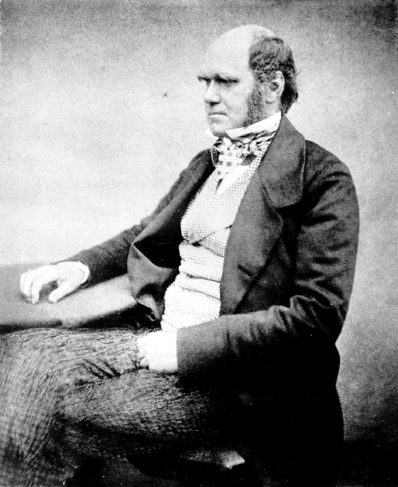
File:Charles Darwin aged 51.jpg
Charles Darwin at age 51

Wednesday, October 3, 2012

10 Tips for Better Microscopy

Fiddling with coarse focus knobs and fine focus knobs can get really old, really fast if you're not sure what you're doing. Here are 10 tips that will have you using your microscope like a pro. Even if you're comfortable with your microscope, these tips will perfect your skills - there's always room to learn something new, right?

1. A compound microscope gives a two-dimensional, flat image. Use a compound microscope for specimens that are to be examined using a slide preparation method (micro). There are monocular, dual-view, binocular and trinocular compound microscopes.

2. A stereo microscope has a binocular body and gives a three-dimensional image. Use a stereo microscope for specimens that have depth or are large in size and require a working distance (macro).

3. Start to focus using the lowest magnification! In a compound microscope, this is the 4X objective and in a stereo microscope, this is the 1X objective. Make sure the objective "clicks" into place before beginning.

4. Always place the specimen to be viewed in the center of the stage or stage plate. If you're using a compound microscope, make sure the slide is placed on the stage with the center over the light.

5. This may sound like a no-brainer, but make sure a slide is right-side-up when viewing it. This is especially important when you're looking at a prepared slide. If it's upside down, it won't be in focus on high power (40X)!

6. When focusing in on an image, use the coarse adjustment knob first, then the fine focus knob. If done correctly, you should be able to change between objectives with just a minor fine focus adjustment. Fun fact: this means the microscope is parafocalled.

7. When you want to adjust the illumination, use the intensity control and condenser or diaphragm.

8. Remember, when using higher magnifications, it is necessary to adjust the light source.

9. Proper care and handling is a must! This will give your microscope a happier, longer life. Always carry a microscope by sing two hands; one hand around the arm and the other under the base.

10. Just like you enjoy being clean, so does your microscope. Keep your microscope clean. To clean the lenses, remove any dust or dirt with a camel brush or canned air. Moisten one end of a Q-tip with lens cleaning solution while keeping the other end of the Q-tip dry. Clean the optical surface by moving the moist part of the Q-tip in a circular motion. Using the dry end of the Q-tip, repeat the same motion to dry. Insider tip: a solution of Windex and vinegar works well. Finally, when you're microscope isn't in use, use a dust cover to store.

Tuesday, February 21, 2012

An Education Revolution...

Is an online education revolution coming? Or is it happening already? We have compiled a list of existing online tools designed to make the life of the teaching community a lot easier.


Teacher Tube

Instead of clicking around hopelessly on YouTube where you are guaranteed distraction, teachers can now upload their teaching videos in one place to share with like-minded educators and students.


Be data driven, Not data drowning.

Kickboard keeps classrooms afloat. Integrated student academic and behavior records highlight trends. Automated classroom management systems save teachers time. Customizable settings mean Kickboard fits your school's existing systems from the start.


Kickboard for Teachers

The command: Be Data Driven. Manage your class efficiently by having an automated management system in place where you can sync class data (grades) into meaningful trends (the correlation between student grades and behavioural problems). Bless your data analysis junkie heart.


Edmodo

The Facebook of eClassroom. A "secure social learning network" that solves the problem of schools banning Facebook. It encourages interaction and collaboration among students and teachers because it puts you in the mindset of socializing, with teachers, and students.


Edutopia - "K-12 Education & Learning Innovations with Proven Strategies that Work" Cleanly packaged website with a  clear goal. How-to videos are posted based on real life case examples, such as, online learning in Idaho. Any forward-thinking educator can now share their teaching experience with online and digital tools.

With start ups launching at a heady pace, and iPads being hand out to students to promote a digital learning environment, there is bound to be a learning curve for educators as they embrace this new technology and fancy management systems.  Are teachers ready for this revolution? Can we find the right way to use these new tools for the same purpose - to teach effectively? How are teaching methods different because of the different tools used? We welcome the input of all teachers who are curious enough to test this technique and those who are ahead of the curve and using these digital tools.

(via Fastcoexist.com)