That's right: TV characters. I'm talking Dora the Explorer and Big Bird reincarnate in science, technology, engineering, and math (STEM) loving form. Can relationships with characters like these really help young children learn STEM skills?
A team of researchers at the University of California, Riverside, Northwestern University, and Georgetown University seem to think so and are gearing up to formally answer that question in a five-year project funded by a $2.5 million grant from the National Science Foundation.
Rebekah Richert, associate professor of psychology at UC Riverside and principal investigator on the project will team up with Ellen Wartella, Sheikh Hamad bin Khalifa Al- Thani Professor of Communication, professor of pyschology and professor of human development and social policy at Northwestern University; and Sandra Calvert, director of the Children's Digital Media Center and professor of psychology at Georgetown University.
In a series of studies with children ages 18 months to six years, the trio will examine how toddlers and preschoolers learn from educational media and how that can support STEM education.
Richert, who's known for her previous research on how children transfer what they see on television and in books to real life, and how they distinguish between fantasy and reality is interested in answering questions like, "How can we promote early STEM learning with high-quality media?" and, "How can we develop better avatars and promote diversity in STEM fields?"
Superheroes and fictional characters that endorse various subject matter and embrace educational material, projecting it onto young audiences isn't a new concept. Nonetheless, the NSF-funded project will look to answer what kind of character could best be used to stimulate STEM learning. Is it a character like Nickelodeon's Dora the Explorer or Sesame Street's Big Bird, or something different all together?
The psychologists will kick things off by conducting a workshop at Northwestern in the spring of 2014 involving experts in science education, computer-game design, and television learning for children to consider how best to direct future research.
Read more about the project and see what Richert had to say on UCR Today.
Swift Optical believes in creating an information-hub for educators, students, and professionals to interact with and learn from each other.
Showing posts with label Education. Show all posts
Thursday, January 23, 2014
Tuesday, January 8, 2013
Make a Lava Lamp This Weekend!
With just water, a clear plastic bottle, vegetable oil, food coloring and some Alka-Selzter (or other tablets that fizz) you can create your own lava lamp on your kitchen counter.
Once you have everything you need to get started, here's what you'll need to do:
- Pour some water into the plastic bottle until it's about a quarter full.
- Pour some vegetable oil into the bottle until it's just about all the way full.
- Wait until the water and oil have clearly separated.
- Add around a dozen drops of your favorite color food coloring to the bottle.
- Observe the food coloring make its way through the oil and into the water, mixing.
- Cut an Alka-Selzter tablet into five or six smaller pieces and drop one of them into the bottle - things should start getting a little crazy, just like a real lava lamp.
- When the bubbling stops, add another piece of the Alka-Selzter tablet and enjoy!
If you're wondering what the science is behind this experiment, check this out: you know that oil and water don't mix very well (or at all), so the two separate from each other with the oil on top because it has a lower density than water. The food coloring is able to fall through the oil and mix with the water - key to this experiment! When you drop the Alka-Seltzer in, it releases small bubbles of carbon dioxide gas that rise to the top of the bottle, taking some of the colored water with it. The gas escapes when it reaches the top of the bottle and the colored water falls back to the bottom. To read more about the science involved, visit the Science Kids website.
Friday, December 28, 2012
Schools Going Digital by 2017
In a report released by the State Educational Technology Directors Association (SETDA) in September titled, "Out of Print : Reimagining the K-12 Textbook in a Digital Age," it was said that textbooks should be a thing of the past by 2017. The report goes on to suggest that states and districts begin making the transition from print to digital instructional material with the next major textbook adoption cycle (which could be soon!), completing the transition by 2017.
Today's youth loves the digital realm and are being introduced to it at an ever-increasing younger age. Just a couple weeks I was in Toys-R-Us shopping for my nephew when I saw a toddler-proof iPad cover. I stood there for a second before telling myself, "You really shouldn't be surprised here." Take a look at the thing for yourself. This just shows that it's never too young to go digital.
Process this for a second: currently, states and districts spend around $5.5 billion on instructional material each year and many students are using textbooks with content that is seven to 10 years old. With the adoption of digital content, schools would be able to update material without any extra print costs. Hello, cost effectiveness!
Further, digital material can be more interactive than print material. Instead of being limited to text and a few illustrations, students can now access video clips, animations and virtual labs. Even better, content can be personalized to accommodate individual student learning needs and abilities. For instance, there are options to hear the text read aloud, instantly look up unfamiliar words and change the font size.
Now, to the teachers. There are major benefits for them too. With digital material, teachers won't be tied down to a singular textbook and the lessons it provides. They'll be able to bring different lessons together and will have the opportunity to get involved in creating and refining their classroom content. That has to sound good to almost every teacher out there!
The 2017 adoption target date was made so schools and districts could create a realistic plan for implementation. So of you oppose the idea of digital textbooks, it looks like they're making their way into classrooms whether you like it or not. Jumping on board might make the transition a little easier.
Tuesday, December 18, 2012
Cheers to Computer Science Education Week!
Here's to Computer Science Education Week! Celebrated last week, CSEdWeek is designated as the second week of December to honor Admiral Grace Murray Hopper's birthday, December 9, 1906, as well as her extraordinary contributions to the computer science field. Hopper was a visionary in the field of computer science and her engineering in programming languages and computer system standards laid the foundation for advancements in computer science from the 1940s - 1970s. Last week, 3,398 people signed the pledge for CSEdWeek.
So what does it all mean? The Triangle Coalition for Science and Technology Education collaborates with various organizations and individuals for better STEM education and put together the facts last week. Here's some of what they found.
The Association for Computing Machinery, one of the core partners of CSEdWeek, has assembled a collection of statistics on the nation's computer science education and job outlook:
So what does it all mean? The Triangle Coalition for Science and Technology Education collaborates with various organizations and individuals for better STEM education and put together the facts last week. Here's some of what they found.
The Association for Computing Machinery, one of the core partners of CSEdWeek, has assembled a collection of statistics on the nation's computer science education and job outlook:
- 150,000 job openings in computing annually
- 1/2 of all STEM jobs will be in computing in 2020
- 22% job growth expected in computing by 2020
- $78,730 earned on average by computing professionals in 2011
- 19% of high school students took computer science courses in 2009, down 6% from 1990
- 9 states nationwide award "core" credit for high school computer science courses
- AP computer science exams comprise less than 1% of all AP exams taken
They added that jobs in computing are among the fastest growing and highest paying of almost any other profession. Despite these opportunities, the computing field faces a shortage of skilled workers and difficulty in keeping students in the pipeline. With significant barriers starting at the K-12 level, the number of students exposed to computer science is declining each year, and only a small percentage are receiving a rigorous education in the subject.
I know what you're thinking, what about the breadth of computer science jobs in the future? What's the story where you live? Well, the National Center for Women & Information Technology (NCWIT) has gathered key computing education and jobs indicators by state and congressional district and assembled them into an interactive map and other easily accessible tools. Individuals can use the data to understand their local situation and to advocate more effectively for changes they would like to see in their schools, colleges and universities. Find out how your state or district ranks in computer science education and jobs at www.ncwit.org/edjobsmap.
To check out resources, events, articles and more about computer science education, visit www.csedweek.org.
I know what you're thinking, what about the breadth of computer science jobs in the future? What's the story where you live? Well, the National Center for Women & Information Technology (NCWIT) has gathered key computing education and jobs indicators by state and congressional district and assembled them into an interactive map and other easily accessible tools. Individuals can use the data to understand their local situation and to advocate more effectively for changes they would like to see in their schools, colleges and universities. Find out how your state or district ranks in computer science education and jobs at www.ncwit.org/edjobsmap.
To check out resources, events, articles and more about computer science education, visit www.csedweek.org.
Friday, December 14, 2012
Race to the Top District Winners Announced!
Earlier this week, the Education Department
announced the 16 winners of the Race to the Top school district grants (RTTD). 61
Finalists had been announced recently out of an original 372 districts that
turned in applications in November. A total of $400 million was due to go out,
and winners ranged from $10 million to $40 million for a period of four years,
depending on the population of the given district. The winners included urban
and rural districts, small districts and large consortia, and public and
charter schools. The only large, urban school district to win was Miami-Dade
(FL), which also just won the Broad Prize.
Education Week reported that U.S. Secretary of Education Arne Duncan said the winners' circle includes "a really good mix" of both districts that are already education-reform leaders, and districts that have not received as much attention.
The winners, by order of total mean score, are as follows:
Education Week reported that U.S. Secretary of Education Arne Duncan said the winners' circle includes "a really good mix" of both districts that are already education-reform leaders, and districts that have not received as much attention.
- Carson City, NV (208.33)
- New Haven Unified, CA (207.67)
- Miami-Dade, FL (207.00)
- Puget Sound Consortium, WA (205.33)
- Guilford County, NC (205.33)
- Metropolitan School District of Warren Township in Indianapolis, IN (205.00)
- IDEA public schools, TX (203.00) [charter schools]
- Charleston County, SC (201.67)
- Harmony Science Academy consortia, TX (201.67) [charter schools]
- St. Vrain Valley, CO (200.33)
- Galt Joint Union, CA (199.67)
- Iredell-Statesville, NC (199.67)
- Middletown City, NY (199.33)
- KIPP, DC (199) [charter schools]
- Green River Regional Education Cooperative, KY (197)
- Lindsay Unified, CA (196.33)
Congratulations to all of these school districts!
Read Education Week's full report.
Wednesday, October 31, 2012
40 STEM iPad Apps for Kids
With the need for students looking towards a STEM career path growing, it's no surprise that technology has figured how to do their part. With iPad apps that revolve around STEM appealing to children, there's a whole new way for them to learn without even knowing it.
These apps are great for giving your child practice, repetition and reinforcement: something that will definitely come in handy during the upcoming holiday breaks!
Categorized by math apps and science, technology and engineering apps, this site is a great tool for parents and educators a like. Check it out!
These apps are great for giving your child practice, repetition and reinforcement: something that will definitely come in handy during the upcoming holiday breaks!
Categorized by math apps and science, technology and engineering apps, this site is a great tool for parents and educators a like. Check it out!
Tuesday, October 30, 2012
Stylish Scientists
October 2012 marked the second annual list of the world's most stylish scientists by Furture-ish!
To be nominated for the list, Future-ish looks over 10 diverse variables including things like involvement in science, design, and culture, unique hobbies and of course, a great personal sense of style. The people that make the cut are changing the world with innovative research and changing a stereotypes every time they make an appearance expressing their oh-so-stylish selves.
Now these are the people we need to be looking at! And Future-ish agrees. They hope that they're list of diverse scientists will serve as role models to inspire everyone, from middle-schoolers and the Mom next door to movie stars and musicians, to become informed and engaged in the fields of STEM. At the end of the day, it is these fields that are shaping our future.
On this year's list: two of PBS's Design Squad Nation's very own. Judy Lee (#6) and Nate Ball (#4) each landed a spot on the list.
Judy said: "I'm totally flattered and honored! I wish there were more awards out there that celebrated breaking old stereotypes. Congrats to everyone."
Nate said: "I'm amused and proud to be a role model in any way, not to mention as an apparently stylish engineer! If you look at some of those other entries, I'm actually wondering why more tech universities don't have modeling schools attached. I guess the list is proof that the words "stylish" and "engineer" aren't mutually exclusive after all!"
If you want to nominate someone for next year's list, send an e-mail with a picture of them and a short bio to studioF@future-ish.com. Self nominations are welcome!
See this year's list.
To be nominated for the list, Future-ish looks over 10 diverse variables including things like involvement in science, design, and culture, unique hobbies and of course, a great personal sense of style. The people that make the cut are changing the world with innovative research and changing a stereotypes every time they make an appearance expressing their oh-so-stylish selves.
Now these are the people we need to be looking at! And Future-ish agrees. They hope that they're list of diverse scientists will serve as role models to inspire everyone, from middle-schoolers and the Mom next door to movie stars and musicians, to become informed and engaged in the fields of STEM. At the end of the day, it is these fields that are shaping our future.
On this year's list: two of PBS's Design Squad Nation's very own. Judy Lee (#6) and Nate Ball (#4) each landed a spot on the list.
Judy said: "I'm totally flattered and honored! I wish there were more awards out there that celebrated breaking old stereotypes. Congrats to everyone."
Nate said: "I'm amused and proud to be a role model in any way, not to mention as an apparently stylish engineer! If you look at some of those other entries, I'm actually wondering why more tech universities don't have modeling schools attached. I guess the list is proof that the words "stylish" and "engineer" aren't mutually exclusive after all!"
If you want to nominate someone for next year's list, send an e-mail with a picture of them and a short bio to studioF@future-ish.com. Self nominations are welcome!
See this year's list.
Nate Ball in the fun engineering clip: Man vs. Sticky Note.
Monday, October 22, 2012
"Keeping the 'T' in STEM"
In 1994, Laura Reasoner Jones started an after school club called Girls Excelling in Math and Science (GEMS Club) to encourage girls to engage in STEM activities and spark their interest in STEM career fields. Over the past 18 years, Jones says they've had a ball and the girls have thrived.
This year, Jones wants to do something she hasn't done before: motivate girls to embrace technology as creators, not users. Since it's been easy to offer experiences and activities in the other three STEM components (science, engineering and math) Jones wants to focus her energy on breaking down the barriers that keep women and young girls away from technology.
Jones explains that early exposure to IT can build confidence in girls, and encourage them to pursue future educational opportunities in the field. Even better, careers in IT are plentiful, high-paying and meaningful.
Despite the facts, enrollment and participation in computing classes has been dropping steadily since the 1980s, and fewer and fewer women are graduating with computer science or IT degrees. There's two problems here: girls are missing out on great career opportunities, and the world is missing out on their talents and perspectives as women.
Jones says that there are several resources we can look at to overcome this dilemma. The National Center for Women and Information Technology offers educators 60 downloadable ideas, including Computer Science in a Box, which teaches the premises of computing without the use of machines. Then there's Alice (alice.org), a program that encourages children, particularly girls, to explore computer science and programming.
While the programs Jones mentions may spark an interest in IT, a girl won't really be enticed unless she feels comfortable in the area. Jones encourages everyone to look around the computer lab/room where girls learn. If the room looks like a locker room or "man cave," educators may want to consider transforming the room to a place where girls and boys of all cultures are welcome with posters of successful men and women alike.
We can all work together to make technology inviting and not intimidating for girls - let's do it!
To read more of Jones' commentary, click here.
This year, Jones wants to do something she hasn't done before: motivate girls to embrace technology as creators, not users. Since it's been easy to offer experiences and activities in the other three STEM components (science, engineering and math) Jones wants to focus her energy on breaking down the barriers that keep women and young girls away from technology.
Jones explains that early exposure to IT can build confidence in girls, and encourage them to pursue future educational opportunities in the field. Even better, careers in IT are plentiful, high-paying and meaningful.
Despite the facts, enrollment and participation in computing classes has been dropping steadily since the 1980s, and fewer and fewer women are graduating with computer science or IT degrees. There's two problems here: girls are missing out on great career opportunities, and the world is missing out on their talents and perspectives as women.
Jones says that there are several resources we can look at to overcome this dilemma. The National Center for Women and Information Technology offers educators 60 downloadable ideas, including Computer Science in a Box, which teaches the premises of computing without the use of machines. Then there's Alice (alice.org), a program that encourages children, particularly girls, to explore computer science and programming.
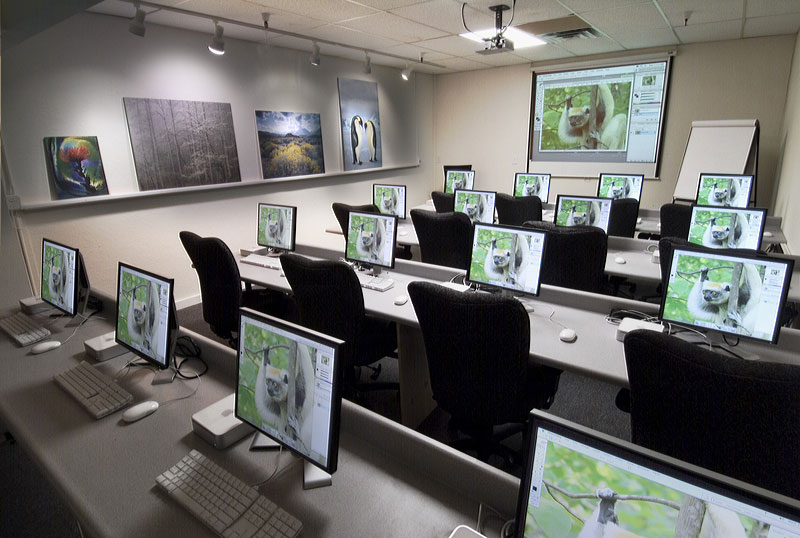
While the programs Jones mentions may spark an interest in IT, a girl won't really be enticed unless she feels comfortable in the area. Jones encourages everyone to look around the computer lab/room where girls learn. If the room looks like a locker room or "man cave," educators may want to consider transforming the room to a place where girls and boys of all cultures are welcome with posters of successful men and women alike.
We can all work together to make technology inviting and not intimidating for girls - let's do it!
To read more of Jones' commentary, click here.
Thursday, October 18, 2012
Abdul-Jabbar Promotes STEM Education
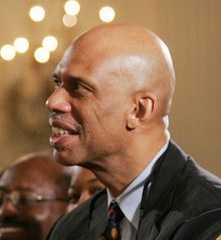
"If America is to maintain our high standard of living, we must continue to innovate," Abdul-Jabbar said in a statement published by Education Week. "We are competing with nations many times our size, and STEM learning represents the engines of innovation. With these engines, we can lead the world, because knowledge is real power."
In his new role of After-School STEM Ambassador, the NBA great will make appearances at after-school programs around California to promote STEM education. This will be just another effort on Abdul-Jabbar's part, who has invested a considerable amount of time promoting STEM education the past few years. Through his Skyhook Foundation, Abdul-Jabbar has been actively pushing the importance of STEM education and STEM-related fields.
Abdul-Jabbar was spotted at the U.S. News and World Report's STEM Conference in Dallas earlier this summer pointing out the cultural shift that's necessary to make STEM jobs more attractive to younger generations - especially those in lower-income communities.
Abdul-Jabbar's role as STEM ambassador in California could take on a particularly high importance in turning around the state's high-quality science instruction. We'll have to stay tuned to see how it goes!
Read more about Abdul Jabbar's involvement in STEM education here.
Wednesday, October 17, 2012
Microscopes 101
Microscope lingo can have any first-time user or owner confused. Swift has put together a list of basic definitions that will have you understanding your microscope and sounding like a seasoned scientist in no time!
- Chromatic Aberration: When lenses fail to focus two different parts of the spectrum in the same focal plane, they suffer from chromatic aberration.
- Condenser: The function of the condenser is to provide full illumination to the specimen place and to enhance the resolution and contracts of the object being viewed.
- DIN Optics: A German Standard for the manufacturing of microscope lenses. Optics are interchangeable from one DIN microscope to another. (DIN: Deutsche Industrial Normen)
- Diopter Adjustment: The ability to adjust the focus for one eyepiece in a binocular or trinocular microscope to compensate for the different in vision between the user's eyes.
- Focal Length: Parallel rays of light after refraction through a lens will be brought to a focus at the focal point. The distance from the optical center of the lens to the focal point, in the focal length, or focus.
- Numerical Aperture (N.A.): A measure of the light gathering capabilities of an objective lens. The concept is comparable to the F-value in photographic lenses. In general, N.A. values less than 1.00 are dry objectives, while values greater than 1.00 require oil as a medium. The N.A. value can be found on individual objectives. NOTE: Condenser lenses are part of the optical system and are also assigned a N.A. value. The condenser system on a scope should match the N.A. of the highest power objective on the microscope.
- Parfocal/Parcenter: A microscope system that is parfocused/parcentered enables the user to switch objective lenses (change powers) and still have the specimen in focus and centered in the field of view.
- Working Distance: The distance between the front lens of the objective and the cover glass when the lens is focused on the specimen.
Friday, October 12, 2012
A Pond Water Safari with Mrs. Seay
Using Swift microscopes and other necessary supplies, science teacher Mrs. Seay gets her class completely involved in the task of identifying and classifying different living organisms found in local pond water. Getting children science savvy with things they think are cool like microscopes and "cool" living organisms, Mrs. Seay has a good chance of encouraging some of her students to pursue majors and careers in science! Every science teacher should check out this Teaching Channel video.
Thursday, October 11, 2012
STEM Education is Worth It...Literally
Student loan debt stories can make anyone cringe. We all know someone that has six-figure loan debt and is still working on finding a job. Look at the numbers on this table! If you're looking at college from an investment standpoint, your conclusion should be clear: STEM majors are where you're going to find the most bang for your buck.
Wednesday, October 10, 2012
Talking to Teens About STEM
Can there really be anything more difficult for a parent than sitting down with your teen and relaying the dangers associated with drugs?
A recent study by Intel says yes! Intel, a member of Change the Equation, found that parents would rather talk to their teens about drugs than match or science. I know what you're thinking - because I'm sure it's the same thing I was thinking - but since a large percentage of today's parents don't have strong backgrounds in science or math, they struggle coming up with stories to relay to their children. They are, however, able to come up with stories about how they feigned off drugs.
Many parents said they'd welcome a "one-stop shop with materials to refresh their existing, but unused math and science knowledge so they can better help there kids."
There's one more problem here. Parents aren't normally able to suppress their own dislike for math, relaying it onto their children sometimes unintentionally. In a survey that Change the Equation conducted just two years ago, more than one third of Americans admitted that they often say they can't do math. Just about one third said they'd rather clean the bathroom than solve a math problem.
Could refreshing STEM skills and changing attitudes be an integral part to the current STEM revolution - I think yes!
Check out Change the Equation's website for more!
A recent study by Intel says yes! Intel, a member of Change the Equation, found that parents would rather talk to their teens about drugs than match or science. I know what you're thinking - because I'm sure it's the same thing I was thinking - but since a large percentage of today's parents don't have strong backgrounds in science or math, they struggle coming up with stories to relay to their children. They are, however, able to come up with stories about how they feigned off drugs.
Many parents said they'd welcome a "one-stop shop with materials to refresh their existing, but unused math and science knowledge so they can better help there kids."
There's one more problem here. Parents aren't normally able to suppress their own dislike for math, relaying it onto their children sometimes unintentionally. In a survey that Change the Equation conducted just two years ago, more than one third of Americans admitted that they often say they can't do math. Just about one third said they'd rather clean the bathroom than solve a math problem.
Could refreshing STEM skills and changing attitudes be an integral part to the current STEM revolution - I think yes!
Check out Change the Equation's website for more!
Tuesday, October 9, 2012
STEM Vital Signs: Texas
As a leading high-tech state, Texas businesses need more STEM talent to stay competitive than ever before. Despite economic downturn, STEM skills are still in high demand in Texas. In fact, there are 2.5 STEM jobs for every one unemployed person compared to 3.3 unemployed persons for every one non-STEM job. Hello, people! Improving student performance in STEM in K-12 is crucial to help not only the Texas economy grow, but the entire nation's.
There are some highlights here, though. Since 2004, the State of Texas, with private sector support, has invested more than $100 million to create 65 STEM Academies serving more than 25,000 students. Texas also recently adopted new math standards and more rigorous assessment and it's paying off. Texas students are spending more time on elementary science, are participating more in hands-on learning and are making progress in math.
Change the Equation's 2012 Vital Signs measure the health of the K-12 STEM enterprise state by state. Vital Signs was created in collaboration with the American Institutes for Research and was made possible by generous support from the Bill and Melinda Gates Foundation.
To look at Change the Equation's full report on the STEM Vital Signs in Texas, click here.
To find out what the STEM Vital Signs are like in your state, click here.
There are some highlights here, though. Since 2004, the State of Texas, with private sector support, has invested more than $100 million to create 65 STEM Academies serving more than 25,000 students. Texas also recently adopted new math standards and more rigorous assessment and it's paying off. Texas students are spending more time on elementary science, are participating more in hands-on learning and are making progress in math.
Change the Equation's 2012 Vital Signs measure the health of the K-12 STEM enterprise state by state. Vital Signs was created in collaboration with the American Institutes for Research and was made possible by generous support from the Bill and Melinda Gates Foundation.
To look at Change the Equation's full report on the STEM Vital Signs in Texas, click here.
To find out what the STEM Vital Signs are like in your state, click here.
Thursday, October 4, 2012
We are All Born Scientists
Scientists at the University of California, Berkeley suggest that young children think and learn about their surroundings just like scientists think and learn in advanced experiments. The parallel isn't hard to see if you really think about it. Scientists form hypotheses, test them, analyze their findings and learn from their actions as well as the actions of others. Cue child's play!
Kids approach the world and their surroundings on a learn by doing basis. The scientists at Cal state that youngsters learn using probabilistic models, engaging with the world through patterns and using those patterns to make predictions. Just like scientific experiments can, this sort of behavior can lead to drastic reformulations of different world views.
This new research adds to a growing body of evidence that early childhood education is crucial. It also supports the notion that making preschool more academic can be detrimental and shy children away from STEM right out of the gates. Alison Gopnik, a professor of psychology and philosophy at Cal and the lead author of the new study, says the children, especially of preschool age, shouldn't necessarily participate in strict lessons and take home flash cards. Instead, she thinks they should be encouraged to examine cause and effect by playing with things and seeing how they work.
Gopnik's research was supported by the National Science Foundation (NSF) and published in Science last Friday.
To read more about the study and what Gopnik had to say about it, check out Rebecca Boyle's article.
Tuesday, October 2, 2012
High Schools Can't Make the STEM Cut
It's not new news that high schools aren't meeting the STEM demands, but the numbers behind the headlines are shocking. Take computer science for example. While computer scientists are in high demand in the United States, only a handful of high schools actually offer any advance training in the subject - and sadly, that number is shrinking.
Here are the facts:
On the brighter side, the Microsoft Technology Education and Literacy in School program is currently training tech professionals to work as part-time computer science teachers in high school. The company has big plans over the next three years that include investing $500 million to expand STEM education broadly!
To check out Kelsey Sheehy's full report on the matter, click here.
Here are the facts:
- Of the more then 42,000 public and private high schools in the U.S., only 2,100 high schools offered the Advanced Placement (AP) test in computer science last year. Brace yourselves - according to a recent Microsoft report, the number of schools offering the AP test in computer science has gone down 25 percent over the past five years!
- Most schools that offer computer science don't allow it to count toward graduation. Only nine states - Georgia, Missouri, New York, North Carolina, Oklahoma, Oregon, Rhode Island, Texas and Virgina - allow computer science credits to fulfill core math or science requirements.
- The other 41 states simply don't regard computer science as either a math or a science.
- There is an estimated 120,000 new jobs requiring a bachelor's degree in computer science expected in the next year along. Yes, people, 120,00! On top of that, nearly 3.7 million jobs in STEM fields are currently waiting to be filled.
On the brighter side, the Microsoft Technology Education and Literacy in School program is currently training tech professionals to work as part-time computer science teachers in high school. The company has big plans over the next three years that include investing $500 million to expand STEM education broadly!
To check out Kelsey Sheehy's full report on the matter, click here.
The 5 Most Educated Countries in the World
The Organization of Economic Cooperation and Development (OECD) released its Education at a Glance 2012 report last week. The report, which includes vocational training as part of high education and post-secondary education, ranked the United States as the fifth most educated country in the world. While the U.S. is home to some of the most renowned institutions of higher education, it's growth rate for higher education is a mere 1.3 percent per year - which is rather low in comparison to the OECD average of 3.7 percent.
The report also analyzed the age of those enrolled in higher education and although the U.S. is one of the world leaders in higher education for people between the ages of 25 and 64, it ranks just 14th globally for the percentage of those enrolled aged 25 to 34.
The countries ahead of the U.S. for most educated countries in the world are Japan at four, Israel at three, and Canada at two. Russia is the reigning holder of the most educated country in the world after seeing a 78 percent increase in post-secondary foreign students between 2005 and 2010.
While fifth isn't last, it looks like STEM isn't the only thing the United States education realm needs to look at to keep future generations competitive educationally.
To view the Christian Science Monitor's full story, click here.
The report also analyzed the age of those enrolled in higher education and although the U.S. is one of the world leaders in higher education for people between the ages of 25 and 64, it ranks just 14th globally for the percentage of those enrolled aged 25 to 34.
The countries ahead of the U.S. for most educated countries in the world are Japan at four, Israel at three, and Canada at two. Russia is the reigning holder of the most educated country in the world after seeing a 78 percent increase in post-secondary foreign students between 2005 and 2010.
While fifth isn't last, it looks like STEM isn't the only thing the United States education realm needs to look at to keep future generations competitive educationally.
To view the Christian Science Monitor's full story, click here.
Monday, October 1, 2012
New Nanotechnology Center at UT Austin
Watch out nanotechnology! After a newly-announced $18.5 million National Science Foundation (NSF), UT Austin is well on its way to becoming one of the leading nanotechnology research centers in the United States. The new NSF Nanosystems Engineering Research Center will be known as the Nanomanufacturing Systems for Mobile Computing and Mobile Energy Technologies and will focus on things like mobile computing, nanomanufacturing, electromagnetic systems and environmental and health sensing.
William Powers Jr., the president of UT Austin, said:
"Nanotechnology is one of the most important frontiers there is. Nanoscale breakthroughs will usher in inventions and solutions we can only dream of today, and thanks to the National Science Foundation and our academic corporate partners, The University of Texas at Austin will be right at the cutting edge.
To read more about the new nanosystems engineering research center, visit Biotechnology Calender, Inc.
Subscribe to:
Posts (Atom)